Dosa Sticking to an Iron Tawa: Seasoning and Temperature Tips
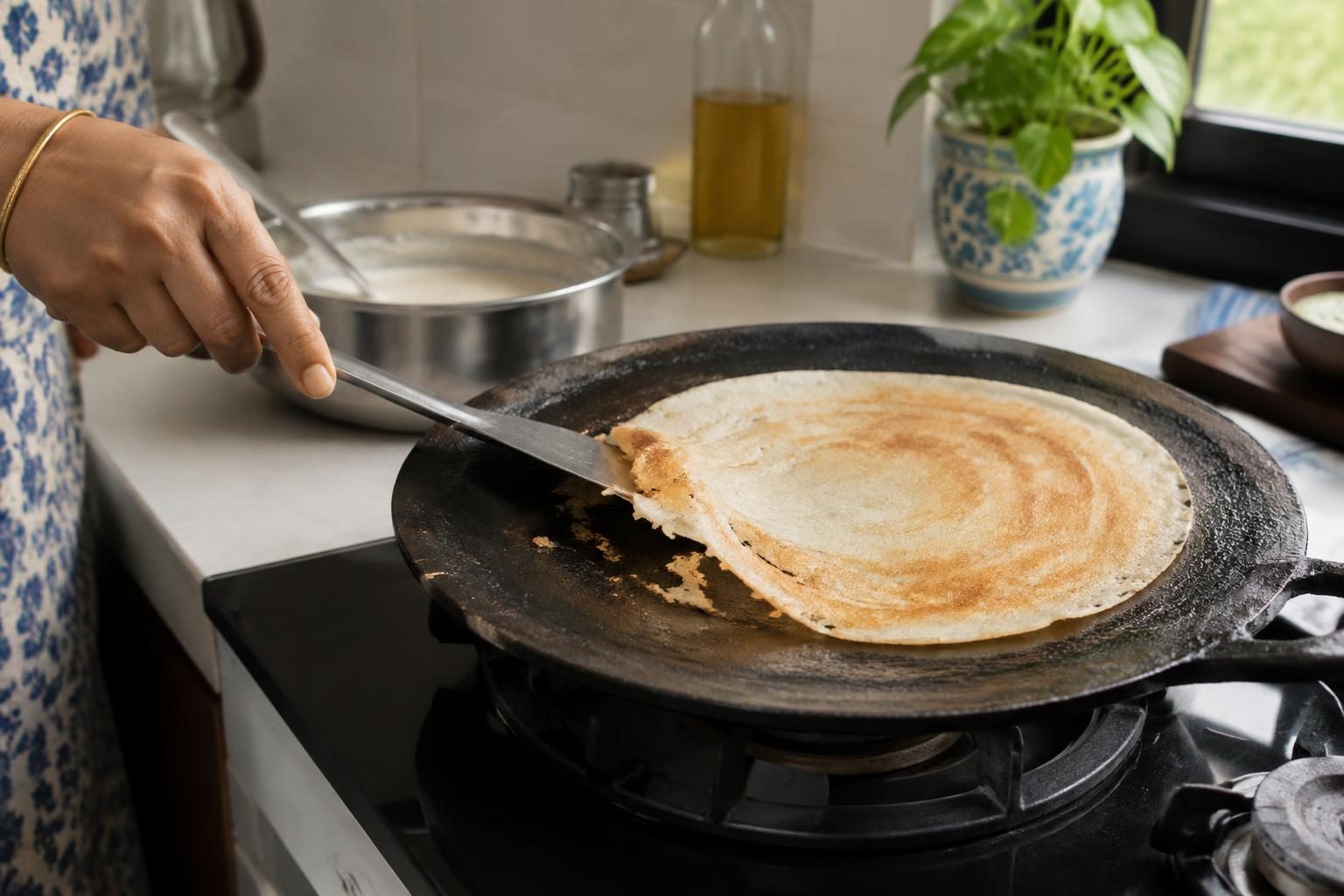
Dosa sticks to an iron tawa mainly due to improper seasoning, incorrect temperature, and insufficient oil. Proper seasoning and medium-high heat prevent sticking.
Contents
- Why does dosa stick to an iron tawa even when it is preheated?
- How does seasoning an iron tawa help prevent dosa from sticking?
- What is the correct temperature range for cooking dosa on a cast iron tawa?
- How do heat distribution and temperature variations on an iron tawa affect dosa sticking?
- What is the best method to season a new iron dosa tawa?
- How much oil should be used to prevent dosa from sticking on an iron tawa?
- Can improper batter consistency cause dosa to stick to the iron tawa?
- How often should I re-season my iron dosa tawa to maintain its non-stick surface?
- Frequently asked questions
- The bottom line
- Sources & methodology
Dosa sticking to an iron tawa typically results from improper seasoning, uneven or incorrect temperature, and insufficient oil usage. Properly seasoning the tawa to build a durable, polymerized oil layer and cooking dosa at medium-high heat helps prevent sticking and produce crisp, well-cooked dosas.
Why does dosa stick to an iron tawa even when it is preheated?
Dosa can stick despite preheating because the heat distribution across the iron tawa is uneven. Cooler spots on the surface fail to cook the batter quickly, causing adhesion. Additionally, if the seasoning layer is thin, new, or uneven, it does not sufficiently protect the iron surface from batter contact. Incorrect temperature—either too low or excessively high—further leads to sticking or burning. Insufficient oil also worsens sticking issues.
According to Neopot and Nyra Kitchenware, these combined factors explain why dosa sticks even when the tawa is preheated.
How does seasoning an iron tawa help prevent dosa from sticking?
Seasoning an iron tawa creates a natural, polymerized oil layer that forms a protective non-stick surface. This replaces any factory coating with a durable layer that prevents batter from directly bonding to raw iron. Seasoning involves heating the tawa until it smokes and applying a thin layer of oil, which polymerizes on the surface when reheated. Repeating this process thickens the layer, maintaining a smooth coating that resists sticking and rust.
Regular re-seasoning preserves this protective barrier to ensure consistent dosa cooking without sticking.
Detailed explanations on seasoning are available from Taste Lab and Pots and Pans India.
What is the correct temperature range for cooking dosa on a cast iron tawa?
The ideal temperature for cooking dosa on an iron tawa is medium-high heat. This heat level ensures the batter spreads evenly, cooks quickly, and crisps without sticking or burning.
Because cast iron conducts heat unevenly, the surface temperature can vary from the center to the edges. The tawa should be hot enough so the batter bubbles and begins to crisp at the edges upon spreading, but not so hot that it smokes excessively, which indicates overheating.
Neopot and Nyra Kitchenware recommend adjusting the heat gradually to maintain this optimal cooking temperature.
How do heat distribution and temperature variations on an iron tawa affect dosa sticking?
Iron tawas typically have a hotter center and cooler edges due to uneven heat conduction. Dosas cooked on cooler zones take longer to cook and have a higher chance of sticking to the tawa.
Understanding your tawa’s hot and cool spots allows you to place the dosa accordingly, ensuring even cooking and reducing sticking risks. Gradually heating the tawa also helps prevent temperature shocks that could damage seasoning or cause sticking.
Nyra Kitchenware highlights the importance of recognizing these variations for better cooking results.
What is the best method to season a new iron dosa tawa?
- Thoroughly clean the new tawa to remove any factory oils or coatings using warm water and mild scrubbing; dry it completely.
- Heat the tawa gradually on medium heat until it starts to emit light smoke.
- Apply a thin layer of cooking oil evenly over the surface with a cloth or paper towel.
- Reheat the tawa to allow the oil to polymerize and bond with the iron, forming a non-stick surface.
- Repeat the oiling and heating process 2 to 3 times to build a durable seasoning layer.
This method forms the essential polymerized layer that prevents sticking. For more details, see Taste Lab.
How much oil should be used to prevent dosa from sticking on an iron tawa?
A thin but sufficient coating of oil before each dosa cooks is crucial to maintain the seasoning layer and create a barrier between the batter and the iron surface. Too little oil increases sticking risk, while excess oil can make the dosa greasy and soggy.
Oils with a high smoke point, such as refined groundnut or rice bran oil, are suitable because they tolerate dosa cooking temperatures without breaking down. These oils also support maintaining the seasoning layer over time.
Pots and Pans India stress the importance of proper oil use for stick prevention.
Can improper batter consistency cause dosa to stick to the iron tawa?
Batter consistency can influence sticking although it is not the sole factor. A batter that is too thick may not spread smoothly and evenly, potentially leading to uneven cooking and increased sticking.
Well-fermented batter with a smooth, fluid consistency spreads easily and cooks into a crisp dosa that releases naturally from the tawa. Conversely, batter with excessive moisture or inadequate fermentation might adhere more strongly to the surface. However, evidence for this effect is mostly experiential and not strongly documented in scientific sources, so it should be considered a likely contributory factor rather than a confirmed cause.
How often should I re-season my iron dosa tawa to maintain its non-stick surface?
Re-season your iron tawa when you notice dryness, rust spots, or increased sticking. Light seasoning every 10 to 15 uses helps maintain the polymerized oil layer and prevent corrosion.
Regular maintenance seasoning preserves the tawa’s durability and ensures steady non-stick performance. This advice is supported by Taste Lab and Pots and Pans India.
Frequently asked questions
Why does dosa stick to an iron tawa even when preheated?
Preheating alone does not avoid sticking because uneven heat distribution, inadequate seasoning, and incorrect temperature also affect stick resistance. Proper seasoning and medium-high heat are necessary to prevent sticking.
How does seasoning an iron tawa help prevent dosa from sticking?
Seasoning creates a polymerized oil layer that acts as a durable, natural non-stick surface. It prevents the batter from coming into direct contact with raw iron, allowing dosa to release easily once cooked.
What is the correct temperature for cooking dosa on a cast iron tawa?
Medium-high heat is ideal. This temperature cooks dosa evenly and crisply while minimizing sticking. Adjust heat gradually and utilize hotter zones on the tawa surface for best cooking.
How do heat distribution and temperature variations on an iron tawa affect dosa sticking?
Because iron tawas heat unevenly, the center tends to be hotter than the edges. Dosas placed on cooler zones cook slowly and may stick. Recognizing these temperature differences helps place dosas for better results.
How much oil should be used to prevent dosa from sticking?
A thin, even layer of oil is best. Too little oil causes sticking, while excess leads to sogginess. Use oils with high smoke points like refined groundnut or rice bran oil to withstand cooking heat.
The bottom line
Dosa sticking to an iron tawa mainly occurs due to uneven heat, insufficient or new seasoning layers, and inadequate oil use. Properly seasoning your tawa to build a durable polymerized oil surface and cooking dosa at medium-high heat avoids sticking and results in crisp, golden dosas. Understanding heat variations on your iron tawa and using appropriate oils and batter consistency further improve cooking success.
For cooking tips on South Indian batters and dosas, see our guides on Idli Batter Not Fermenting in Winter: Tested Fixes and Instant Ragi Dosa Without Fermentation: Simple Recipe and Method.
Sources & methodology
We reviewed the primary references below when checking the time-sensitive facts in this guide. Product features, prices, rules and eligibility can change, so confirm important details with the linked authority before acting.
- Why Does My Dosa Stick to a Cast Iron Tawa? 7 Fixes – Neopot neopot.inThis article outlines seven common reasons for dosa sticking to the cast iron tawa, including insufficient heat, excessive heat, thin or new seasoning, and improper batter and oil management. It provides solutions such as preheating the tawa, adjusting flame levels, and maintaining seasoning to prevent sticking.
- Seasoning the Dosa Tawa — Glossary | Taste Lab www.tastelab.foodThis glossary entry explains the process of seasoning the dosa tawa, which involves building and maintaining a non-stick cooking surface on the cast iron or carbon steel griddle. It details the steps of scrubbing off the factory coating, heating the tawa until it begins to smoke, and applying a thin layer of oil to create a polymerized surface.
- Why Your Dosa Sticks to the Tawa and How to Fix It - PotsandPans India www.potsandpans.inThis article discusses the common causes of dosa sticking to the tawa, such as insufficient seasoning, excessive heat, and improper batter and oil management. It offers solutions like ensuring proper seasoning, adjusting heat levels, and using the right amount of oil to prevent sticking.
- Tawa: Types, Materials, Uses & Buying Guide – Nyra® Kitchenware nyrakitchenware.inThis buying guide explains how heat distribution affects tawa cooking, noting that cast iron does not conduct heat evenly, leading to temperature differences between the center and edges. It also discusses the causes of food sticking to the tawa, including insufficient seasoning, incorrect surface temperature, and batter composition.