Pressure Cooker Rice-to-Water Ratio: Guide by Rice Type
The ideal pressure cooker rice-to-water ratio varies by rice type and typically uses about 25-30% less water than stovetop methods. Adjust for rice age, altitude, and cooker type to get perfect rice every time.
Contents
- What is the ideal rice-to-water ratio for different types of rice when using a pressure cooker?
- How does the age of rice affect the water needed in pressure cooker recipes?
- Why do pressure cookers require less water than stovetop cooking for rice?
- How should water ratios be adjusted for altitude when cooking rice in a pressure cooker?
- What are the best practices for preparing rice in a pressure cooker to ensure optimal texture?
- What are the recommended cooking times and water ratios for common rice types in a pressure cooker?
- Frequently asked questions
- The bottom line
- Sources & methodology
The ideal pressure cooker rice-to-water ratio varies by rice type, generally needing 25-30% less water than traditional stovetop cooking because steam is trapped and evaporation is minimal. For example, white long-grain rice usually requires about 1 cup of rice to 1.25 cups of water, while brown or wild rice needs more water and longer cooking times. Adjustments should also consider the rice's age, altitude, and personal texture preference to achieve optimal results.
What is the ideal rice-to-water ratio for different types of rice when using a pressure cooker?
Pressure cookers require less water than stovetop methods due to reduced evaporation, so starting water ratios are generally lower.
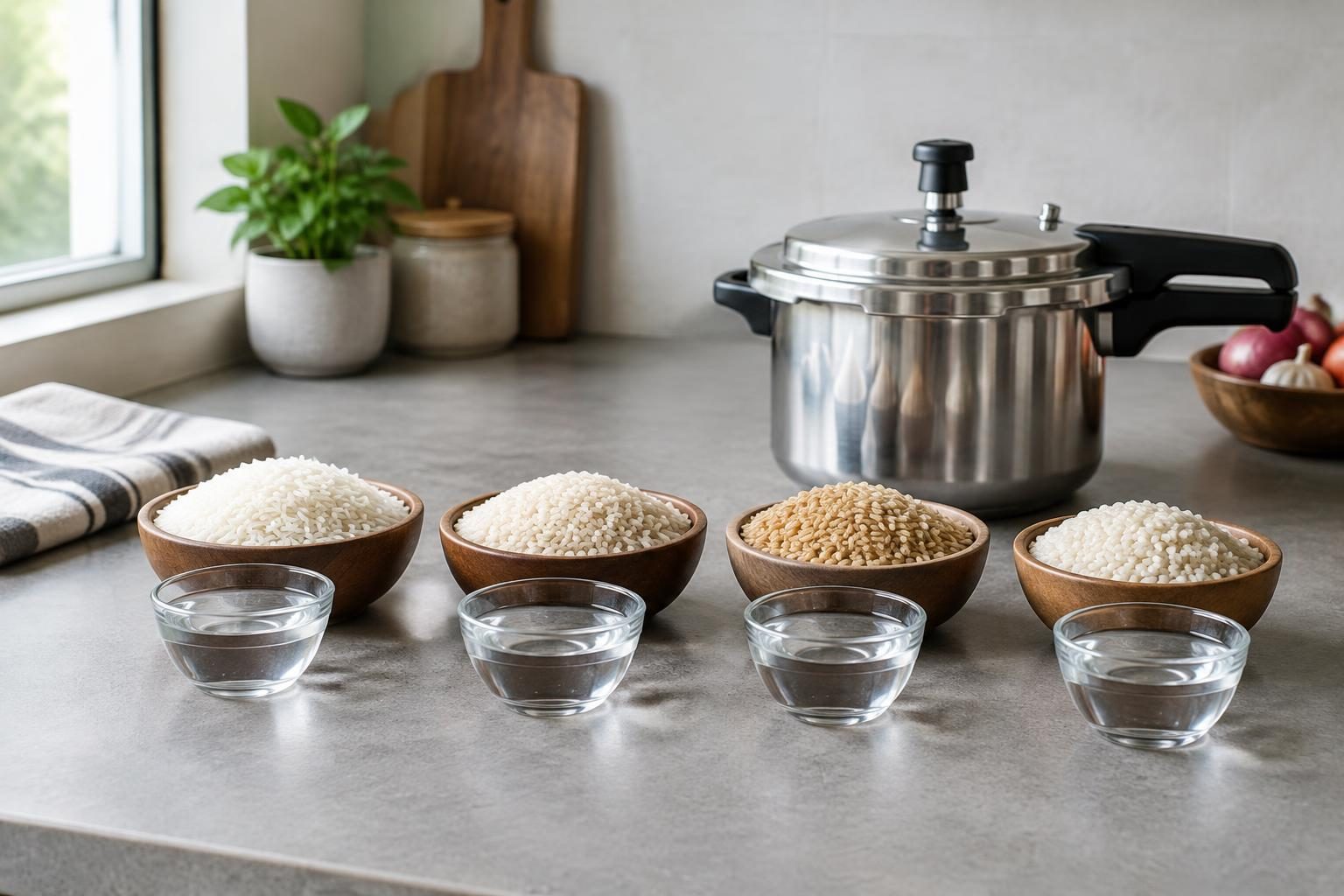
- White long-grain rice: 1 cup rice to about 1.25 cups water
- Basmati rice: 1 cup rice to 1.25–1.5 cups water
- Jasmine rice: 1 cup rice to 1.25–1.5 cups water
- Sushi rice: 1 cup rice to 1.3 cups water
- Brown rice: 1 cup rice to 1.5–1.75 cups water
- Wild rice: 1 cup rice to 2 cups water
These ratios reflect the grain structure and cooking time differences among rice types, with denser or older grains requiring more water. Starting points should be adjusted based on personal preference and rice variety.
According to Frugal Organic Mama and Fuzzy Logic Rice Cooker, pressure cooking uses roughly 25-30% less water than stovetop methods since evaporation during pressure cooking is minimal.
How does the age of rice affect the water needed in pressure cooker recipes?
The age of rice affects its moisture content and cooking behavior. Freshly harvested rice retains more moisture and thus requires 10-15% less water in cooking. In contrast, aged rice has drier grains, needing an increase of 15-25% more water for optimal softness and texture.
Adjust your water levels depending on how long the rice has been stored. For example, older basmati rice stored for months will absorb more water and require a longer cooking time to avoid hard or dry grains.
These adjustments help prevent dry or mushy rice and ensure better texture, especially important for Indian cooking conditions where rice varieties and storage practices vary.
Source: Frugal Organic Mama.
Why do pressure cookers require less water than stovetop cooking for rice?
Pressure cookers trap steam inside the sealed pot, drastically reducing water evaporation compared to open pot stovetop cooking. Because the steam and moisture stay contained, less water starts in the pot to cook the rice fully.
This confinement also shortens cooking times and conserves energy while delivering consistent rice texture. Traditional stovetop methods lose water as steam escapes, requiring more water initially to compensate.
This key difference is why pressure cooker rice-to-water ratios typically range 25-30% lower than stovetop methods.
Source: Frugal Organic Mama.
How should water ratios be adjusted for altitude when cooking rice in a pressure cooker?
At higher altitudes, where atmospheric pressure is lower and boiling points drop, rice requires more water and longer cooking times for proper texture.
Exact numeric adjustments for pressure cooker rice-to-water ratios at altitude are not widely established. However, small incremental increases in water (about 5-10%) and extended cooking times are recommended to compensate.
Trial and error based on local conditions and variety is advisable, monitoring rice firmness and moisture after cooking to fine-tune the ratio.
Source: Fuzzy Logic Rice Cooker.
What are the best practices for preparing rice in a pressure cooker to ensure optimal texture?
Perfect rice in a pressure cooker involves several key preparation and cooking steps:
- Rinse rice thoroughly: Washing removes excess surface starch that can cause clumping.
- Measure precisely: Use accurate measuring cups for rice and water to maintain consistent texture.
- Cook at recommended pressure: Use low simmer pressure settings advised by the manufacturer, avoiding excessive pressure that can overcook the rice.
- Rest after cooking: Let the rice sit with the lid closed for 5-10 minutes post-cooking to allow moisture to distribute evenly.
- Fluff gently: Use a fork to gently separate grains before serving for ideal presentation and texture.
Adhering to these steps helps create fluffy, well-cooked rice with individual grains intact, suitable for Indian meals or other cuisines.
Source: Frugal Organic Mama.
What are the recommended cooking times and water ratios for common rice types in a pressure cooker?
Cooking times and water ratios vary by rice type, typically starting with the following guidelines:
| Rice Type | Rice-to-Water Ratio (cups) | Cooking Time (minutes under pressure) |
|---|---|---|
| White long-grain | 1 : 1.25 | 3-5 |
| Basmati | 1 : 1.25–1.5 | 4-6 |
| Jasmine | 1 : 1.25–1.5 | 4-6 |
| Sushi rice | 1 : 1.3 | 4-5 |
| Brown rice | 1 : 1.5–1.75 | 20-22 |
| Wild rice | 1 : 2 | 20-25 |
Use ratio calculators available online as starting points to get precise measurements and yields. Adjust cooking times and water ratios for desired texture or personal preference.
Sources: Fuzzy Logic Rice Cooker, Moneydeck Rice to Water Ratio Calculator.
Frequently asked questions
Does the rice type significantly impact the pressure cooker water ratio?
Yes, the rice type greatly affects the amount of water needed because different grains vary in density, size, and cooking time. For example, brown rice absorbs more water and takes longer to cook than white rice, requiring a higher rice-to-water ratio.
How much water is needed for common rice types like basmati, jasmine, and brown rice in a pressure cooker?
Basmati and jasmine rice typically need about 1.25 to 1.5 cups of water per cup of rice, while brown rice requires more water, around 1.5 to 1.75 cups. Wild rice usually demands about 2 cups of water per cup of rice due to its tougher grain.
Can personal preference influence the rice-to-water ratio in a pressure cooker?
Absolutely. Some prefer softer, stickier rice which requires slightly more water, while others prefer firmer, separate grains needing less water. Adjusting water to your taste is common and recommended after mastering basic ratios.
Are there any differences in cooking times for different rice types in a pressure cooker?
Yes. White rice varieties cook quickly, around 3 to 6 minutes under pressure, whereas brown and wild rice may require 20 minutes or more because of their fibrous bran layers and tougher grains.
What cooking steps beyond water ratio are important for good pressure cooker rice?
Beyond the ratio, rinsing off excess starch, precise measuring, cooking at correct pressure, resting rice after cooking, and fluffing before serving are important practices to ensure fluffy texture and prevent clumping.
The bottom line
Using the correct pressure cooker rice-to-water ratio depends mainly on the rice type, age, and altitude, with pressure cooking generally requiring 25-30% less water than stovetop methods. Fine-tuning water amounts along with proper preparation—rinsing, resting, and fluffing—ensures consistently well-cooked rice. Online ratio calculators and guides provide helpful starting points for home cooks across various rice types.
For readers interested in regional conditions affecting rice cooking, see our Tamil Nadu Northeast Monsoon and regional cooking conditions and Varanasi culture and traditional rice varieties insights articles.
Sources & methodology
We reviewed the primary references below when checking the time-sensitive facts in this guide. Product features, prices, rules and eligibility can change, so confirm important details with the linked authority before acting.
- Rice to Water Ratio: The Complete Chart for Every Type of Rice www.fuzzylogicricecooker.comThis source provides a comprehensive chart detailing the rice-to-water ratios for various rice types, including white long-grain, jasmine, basmati, sushi, brown, wild, and others. It emphasizes that the ideal ratio varies by rice type and cooking method, with pressure cookers requiring less water due to minimal evaporation. The chart offers starting points for each rice type, noting that factors like rice age, cooker type, and altitude can affect the results. The source also advises adjusting the ratios based on personal preference and specific conditions.
- Rice Water Ratio Chart for Every Type www.frugalorganicmama.comThis article presents a detailed rice-to-water ratio chart for different rice types, including white long-grain, jasmine, basmati, sushi, brown, wild, and others. It highlights that the ideal ratio depends on rice type, cooking method, and rice age. The source notes that pressure cookers require 25-30% less water than stovetop methods due to reduced evaporation. It also discusses how rice age impacts absorption, with fresh rice needing 10-15% less water and aged rice requiring 15-25% more. The article provides non-negotiable steps for perfect rice, such as rinsing, precise measuring, low simmering, resting, and fluffing with a fork.
- Rice to Water Ratio Calculator – How much water for any rice, plus cook time, yield and servings moneydeck.ioThis tool offers a rice-to-water ratio calculator that provides water measurements for various rice types, including long-grain white, jasmine, basmati, medium-grain white, short-grain/sushi rice, and others. It includes stovetop and pressure cooker ratios, cooking times, and estimated cooked yields per cup of dry rice. The calculator also offers a reference table for stovetop ratios and provides assumptions, limitations, and practical tips, such as adjusting for altitude and rice age.