Washing Machine for a Family of Four: Choosing Capacity
For a family of four, an 8–9 kg washing machine (about 4.0–4.4 cubic feet) efficiently handles typical laundry needs, balancing load size and space considerations.
Contents
- What washing machine capacity is ideal for a family of four?
- How does laundry frequency affect the size needed?
- Is it better to buy a larger machine for bulky or occasional items?
- What typical laundry weights correspond to washing machine capacities?
- How do front-load and top-load washing machines compare for a family of four?
- How should space and budget constraints influence washing machine choice?
- What is the recommended number of loads per week for a family of four?
- Comparison of front-load vs. top-load washing machines for a family of four
- Frequently asked questions
- The bottom line
- Sources & methodology
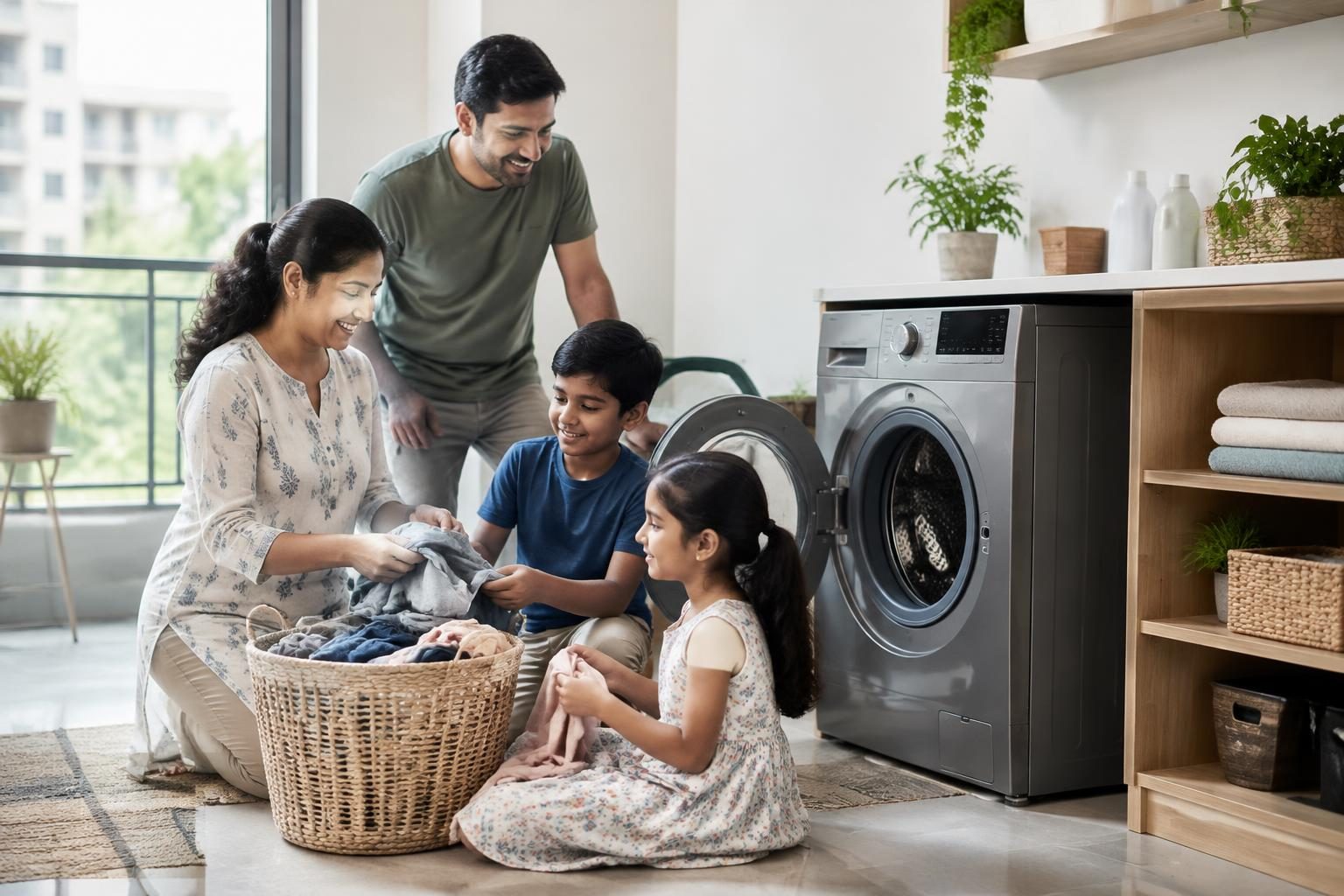
For a family of four, an 8–9 kg washing machine capacity (around 4.0–4.4 cubic feet) is ideal to handle regular laundry with efficiency. This size strikes a balance between washing frequency, load size, and space, ensuring the machine can manage most weekly laundry comfortably without excessive runs.
What washing machine capacity is ideal for a family of four?
A washing machine with an 8–9 kg capacity is generally recommended for families of four. This corresponds roughly to a drum size of 4.0–4.4 cubic feet, which accommodates typical laundry loads efficiently.
This capacity offers a practical balance: it’s large enough to handle the weekly laundry volume for most families without requiring multiple small loads, yet not so large that it demands excessive space.
According to Livemint and Precision Appliance Leasing, this size meets the needs of families with four or five members under typical conditions.
How does laundry frequency affect the size needed?
Laundry frequency significantly impacts the ideal washing machine capacity. If a family prefers to wash clothes more frequently—say, every day or every two days—they may get by with a smaller machine such as 6–7 kg.
However, less frequent washing, such as once or twice per week, demands a larger capacity to handle bigger loads all at once, typically 8–9 kg or more.
Precision Appliance Leasing explains that considering your actual laundry wash cycle habits helps in selecting the right size.
Is it better to buy a larger machine for bulky or occasional items?
If your family regularly needs to wash bulky items like comforters, heavy bedding, or special sports gear, it may be wise to opt for a 10–12 kg capacity washing machine.
Larger-capacity machines reduce the number of loads needed for bulky items but require more floor space and often come at a higher price.
This is supported by advice from Precision Appliance Leasing, which highlights that large drum sizes help families manage bigger single loads efficiently.
What typical laundry weights correspond to washing machine capacities?
A machine with about 4.0 cubic feet drum space can handle approximately 50–70 pounds (22.5–32 kg) of laundry per week spread over 4–6 loads, ideal for a family of four.
These loads typically include:
- Adult clothing: 15–20 lbs
- Children’s clothing: 10–15 lbs
- Towels and washcloths: 12–15 lbs
- Bedding for multiple beds: 8–12 lbs
- Sports uniforms or special items: 5–8 lbs
These figures come from the Guidespot Washing Machine Capacity Guide.
How do front-load and top-load washing machines compare for a family of four?
Front-load HE (high-efficiency) washing machines of 8–9 kg capacity generally outperform agitator top-load machines of comparable size. They tend to use less water and energy while providing better cleaning performance.
However, some families prefer top-load machines for their easier loading and lower upfront cost. The choice depends on your preference, budget, and available space.
According to Precision Appliance Leasing, front-loaders offer greater efficiency, which can be beneficial when washing larger, more frequent loads.
How should space and budget constraints influence washing machine choice?
When space is limited or your budget is tight, choosing a smaller machine of 6–7 kg may be necessary. This smaller size is easier to fit and usually costs less but will require more frequent washing cycles.
It’s important to balance your available space and budget with how often you’re willing to do laundry.
As noted by Precision Appliance Leasing, the ideal size depends on your washing frequency alongside these practical constraints.
What is the recommended number of loads per week for a family of four?
Most households of four will handle around 4 to 6 laundry loads per week, totaling roughly 50–70 lbs of laundry.
This can vary depending on the size of each load, frequency of washing, and volume of bulky items.
Managing this load with an 8–9 kg capacity washing machine aligns well with typical family laundry needs.
Source: Guidespot Washing Machine Capacity Guide.
Comparison of front-load vs. top-load washing machines for a family of four
| Feature | Front-Load (8–9 kg) | Top-Load (Similar Capacity) |
|---|---|---|
| Water and Energy Use | Lower (more efficient) | Higher (less efficient) |
| Cleaning Performance | Generally better | Moderate |
| Space Needed | Side-loaded, may need deeper space | Top-loaded, taller but less depth often |
| Price | Usually higher upfront cost | Generally less expensive |
| Maintenance | Can be more complex | Usually simpler |
| Bulky Items | Good with large drums | May be limited by agitator size |
Frequently asked questions
Does laundry frequency affect the washing machine size needed for a family of four?
Yes, families that wash clothes more frequently can usually manage with a smaller washing machine (6–7 kg). Those who prefer fewer washes per week benefit from larger machines (8–9 kg) to handle bigger loads.
Is it better to buy a larger washing machine than needed for occasional bulky items?
If bulky items like comforters or heavy bedding are washed regularly, a larger 10–12 kg machine is practical. For occasional usage, it may be more cost-effective to stick with an 8–9 kg machine and do extra loads as needed.
What is the difference between front-load and top-load washing machines for a family of four?
Front-load machines typically use less water and energy and provide better cleaning but are more expensive and need more space. Top-load machines are often cheaper and simpler but less efficient.
Can a smaller washing machine suffice if washing is done more frequently?
Yes, a 6–7 kg machine can work if laundry is done every 1-2 days, but it means more frequent cycles and slightly higher energy and water use overall compared to fewer larger loads.
Are there energy or water efficiency benefits to choosing certain washing machines for a family of four?
Front-load high-efficiency washing machines use less water and energy than agitator top-load models of the same capacity, making them more sustainable choices for regular family laundry.
The bottom line
An 8–9 kg washing machine with approximately 4.0–4.4 cubic feet drum capacity is the practical ideal for a family of four, handling typical laundry loads effectively without requiring excessive washing cycles. Consider your laundry frequency, bulky items, space, and budget to make the best choice. Front-load machines offer efficiency advantages, but preferences and constraints vary.
Explore our Best washing machines under ₹30,000 in India guide for affordable and reliable options.
Sources & methodology
We reviewed the primary references below when checking the time-sensitive facts in this guide. Product features, prices, rules and eligibility can change, so confirm important details with the linked authority before acting.
- A large family doesn’t always need a bigger washing machine: Here’s what matters www.livemint.comFor a family of four to five with regular laundry, an 8–9 kg capacity is recommended. For families of five to six with heavier loads, a 9–10 kg capacity is suggested. For large or joint families with batch washing, a 10 kg+ capacity is advised. For frequent washing of blankets and bulky bedding, a 10 kg+ capacity is also recommended. These ranges should be treated as a starting point rather than a strict rule. Your washing frequency, sorting habits, wardrobe, bedding, and available installation space can all change the calculation. Ultimately, the right washing machine capacity is determined by your typical load, not simply your headcount. If you wash clothes frequently, a smaller machine may be enough. If you batch several days of laundry together or regularly wash bulky bedding, the extra capacity of a 9, 10, or 12 kg model could be worthwhile. Before making the final choice, look at your laundry basket for a week. How often do you wash, how large are your typical loads, and what bulky items go into the machine? That real-world picture will tell you far more than a family-size chart.
- Washing Machine Capacity Guide 2026: Cubic Feet Chart www.guidespot.comFor a family of four, a 4.0–4.4 cu. ft. medium washer is recommended, which can handle 50–70 lbs of laundry per week in 4–6 loads. This size is also the most common in showrooms, offering the broadest selection and deepest price competition. A 4.0 cu. ft. washer can handle adult clothing (15–20 lbs), children's clothing (10–15 lbs), towels and washcloths (12–15 lbs), bedding for multiple beds (8–12 lbs), and sports uniforms or special items (5–8 lbs).
- What Size Washing Machine Does a Family of 4 Really Need? precisionapplianceleasing.comFor most families of four, a washer with a drum capacity around 8–9 kg (about 17.5–20 lbs) is a practical sweet spot. This size is large enough to handle daily clothing loads and smaller bedding items without running excessive loads, yet compact enough for typical laundry spaces. If your household regularly washes bulky items (comforters, sleeping bags, large rugs) or prefers to do fewer, larger loads, consider a 10–12 kg (22–26 lb) drum. If space or budget is tight and you're willing to run more frequent loads, a 6–7 kg (13–15 lb) machine can work but will require more cycles per week. Also, factor in machine type: a front‑load HE 8–9 kg machine will usually perform better and use less water/energy than an agitator top‑loader of the same labeled capacity, so choose based on your load mix (bulky vs daily wear), space, and priorities for energy/water savings.