Air Purifier Filter Replacement Cost: Comparing Ownership Costs
Air purifier filter replacement costs vary by filter type and model, typically ranging from $50 to $200 annually. Including energy use, total ownership can exceed $250 for premium purifiers, with costs in India depending on local factors.
Contents
- How often should I replace my air purifier filter?
- What is the typical cost of replacing different types of air purifier filters?
- How much does energy consumption add to the annual operating cost of an air purifier?
- Which types of air purifiers have the highest filter replacement and operating costs?
- How do filter replacement costs and availability differ in the Indian market?
- Is it more cost-effective to clean filters or replace them?
- What factors should I consider for the overall cost of owning an air purifier?
- Frequently asked questions
- The bottom line
- Sources & methodology
The cost of replacing air purifier filters varies depending on the filter type and model, typically ranging from approximately $50 to $200 annually. When combined with electricity costs, total yearly ownership expenses can exceed $250 for premium air purifiers. In India, costs may vary significantly due to local filter availability and varying electricity tariffs.
How often should I replace my air purifier filter?
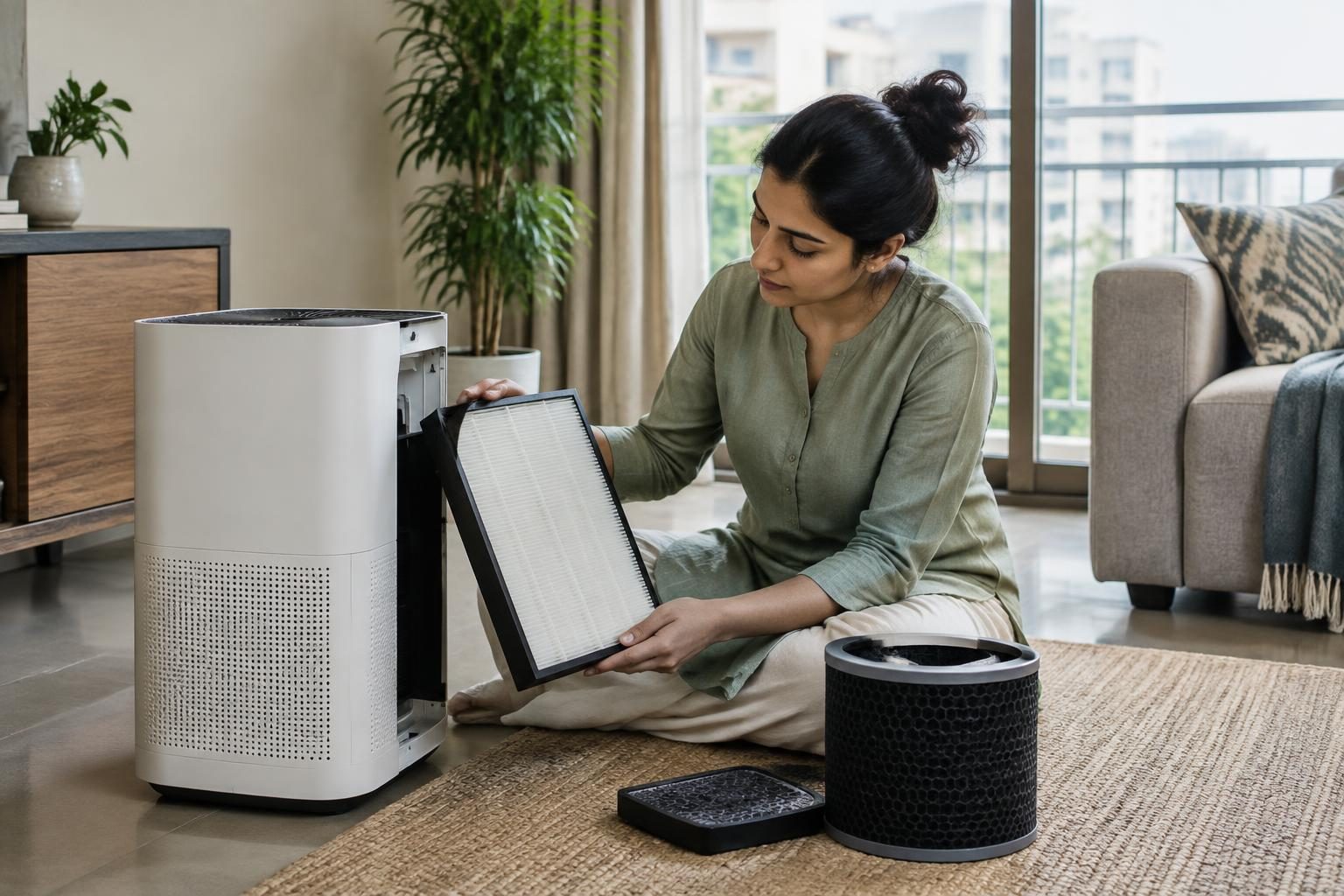
Filter replacement frequency depends on the type of filter and manufacturer recommendations to maintain air quality and device performance. Pleated mechanical filters should usually be replaced every six to 12 months, while activated carbon filters generally require replacement about every three months for optimal function.
- Pleated mechanical filters: replace every 6-12 months
- Activated carbon filters: replace roughly every 3 months
- Following manufacturer and expert guidance helps maintain purifier effectiveness and longevity
What is the typical cost of replacing different types of air purifier filters?
The replacement cost varies by filter type and brand. Pleated mechanical filters usually have lower replacement costs and longer replacement intervals. Activated carbon filters tend to require more frequent changes, which can increase annual expenses. For example, premium models like the Coway Airmega ProX may incur annual filter replacement costs approaching $200.
| Filter Type | Replacement Frequency | Approximate Annual Cost |
|---|---|---|
| Pleated Mechanical | 6-12 months | Lower cost, varies by brand |
| Activated Carbon | About every 3 months | Higher due to more frequent replacements |
| Premium Filters (e.g., Coway Airmega ProX) | 6-12 months | Up to $200 |
How much does energy consumption add to the annual operating cost of an air purifier?
Energy costs depend on the air purifier’s efficiency and local electricity rates. For instance, the Coway Airmega ProX is estimated to incur about $59 per year in electricity costs. Energy expenses, combined with filter replacements, make up a significant portion of total ownership costs.
- Energy use varies by purifier model and its power efficiency
- Local electricity prices influence overall operating expenses
- Example: Coway Airmega ProX energy cost is approximately $59 annually
Which types of air purifiers have the highest filter replacement and operating costs?
High-performance residential air purifiers with high airflow rates and efficient particle capture capabilities generally have the highest purchase, maintenance, and operating costs. These models often use advanced filters that may require more frequent replacement but provide improved air purification.
- High-performance purifiers typically have higher upfront and upkeep costs
- More advanced filtration systems offer enhanced air quality benefits
How do filter replacement costs and availability differ in the Indian market?
Publicly available detailed pricing data for air purifier filters in India is limited, which means consumers should carefully evaluate local filter availability and brand-specific costs. Electricity rates in India vary significantly by region, affecting total operational expenses. Consumers may choose to balance between cleaning reusable filters and replacing them, depending on cost-effectiveness and filter technology.
- Indian market filter pricing data is not widely published, based on market observations
- Regional electricity cost variation impacts annual operating costs
- Consumers often weigh cleaning reusable filters against replacement costs
Is it more cost-effective to clean filters or replace them?
Some air purifier filters can be cleaned and reused, but most pleated mechanical and activated carbon filters require regular replacement to maintain filtration efficiency. While cleaning can extend a filter’s lifespan, improper cleaning risks degrading performance. Following manufacturer guidelines is essential for balancing cost savings with effective air purification.
- Certain filters are washable; others are designed for regular replacement
- Improper cleaning may reduce filter effectiveness
- Adhering to manufacturer instructions ensures optimal function and durability
What factors should I consider for the overall cost of owning an air purifier?
Total ownership cost includes the initial purchase price, filter replacement frequency and expenses, energy consumption, and maintenance practices. Local electricity rates and availability of replacement filters also significantly impact costs. Usage intensity and maintenance habits further influence true ongoing expenses.
- Initial unit cost plus expected annual filter replacement spending
- Electricity usage affected by purifier efficiency and local tariffs
- Maintenance and frequency of use influence operating costs and appliance lifespan
Frequently asked questions
How often should I replace the air purifier filter?
Consumer Reports recommends replacing pleated mechanical filters every six to 12 months and activated carbon filters about every three months to maintain optimal performance and durability (Consumer Reports).
What is the typical cost of replacing an air purifier filter?
Replacement costs vary by type and model, generally ranging between $50 and $200 annually. High-end purifiers like the Coway Airmega ProX tend to be at the upper end of this range (Consumer Reports).
How much does energy consumption add to the operating cost of an air purifier?
Energy expenses depend on purifier efficiency and local electricity pricing. For example, the Coway Airmega ProX consumes about $59 worth of electricity yearly, contributing notably to total operating costs (Consumer Reports).
Are activated carbon filters more expensive or replaced more frequently than mechanical filters?
Activated carbon filters generally require more frequent replacement—about every three months—compared to pleated mechanical filters that often last six to 12 months, making carbon filters more costly annually.
Is it more cost-effective to clean filters or replace them?
While some filters can be cleaned and reused, most require replacement to maintain filtration efficiency. Cleaning may extend filter life but risks performance loss if done improperly. Following manufacturer guidelines is important for cost-effectiveness and device health.
The bottom line
Air purifier filter replacement is a major component of ongoing ownership costs, typically ranging between $50 and $200 annually depending on filter type and model. When factoring in electricity use, total yearly costs for premium purifiers can exceed $250. In India, local availability of filters and variable electricity tariffs require consumers to carefully evaluate expenses based on their specific context.
For Indian consumers seeking broader appliance guidance, consider our articles on reliable washing machines under ₹30,000 in India for practical appliance buying guidance, key facts Indian consumers should know about regional climate and appliance use, and practical safety and maintenance tips relevant for Indian users of home appliances.
Sources & methodology
We reviewed the primary references below when checking the time-sensitive facts in this guide. Product features, prices, rules and eligibility can change, so confirm important details with the linked authority before acting.
- Air Purifiers and the Cost of Clean Air www.consumerreports.orgConsumer Reports provides detailed information on the costs associated with air purifiers, including initial purchase price, maintenance (such as cleaning or replacing filters and parts), and operation (such as electricity). The most effective air cleaners—those with high airflow rates and efficient particle capture systems—generally are the most costly. For example, the Coway Airmega ProX has an annual operating cost of $259, which includes $200 for filter replacements and $59 for energy use. ([consumerreports.org](https://www.consumerreports.org/appliances/air-purifiers/air-purifiers-and-the-cost-of-clean-air-a6152505326/?utm_source=openai))
- Air Purifier Buying Guide www.consumerreports.orgConsumer Reports outlines the importance of regular filter maintenance for air purifiers. They recommend replacing pleated mechanical filters (or cleaning those that can be vacuumed) every six to 12 months and changing out activated carbon filters every three months. This maintenance ensures optimal performance and longevity of the device. ([consumerreports.org](https://www.consumerreports.org/appliances/air-purifiers/buying-guide/?utm_source=openai))
- Residential Air Cleaners (Second Edition): A Summary of Available Information 19january2017snapshot.epa.govThe U.S. Environmental Protection Agency (EPA) discusses the costs associated with residential air cleaners, including initial purchase price, maintenance (such as cleaning or replacing filters and parts), and operation (such as electricity). The most effective air cleaners—those with high airflow rates and efficient particle capture systems—generally are the most costly. ([19january2017snapshot.epa.gov](https://19january2017snapshot.epa.gov/indoor-air-quality-iaq/residential-air-cleaners-second-edition-summary-available-information_.html?utm_source=openai))