Front Load vs Top Load Washing Machine for Hard Water
Front load washing machines generally perform better in hard water areas due to lower water use and gentler fabric care, though both need maintenance tailored to hard water.
Contents
- Which washing machine type is better suited for hard water conditions, front load or top load?
- Does hard water affect the cleaning performance of front load and top load washing machines differently?
- Which washing machine uses less water and energy in hard water areas?
- How does hard water impact the lifespan and maintenance needs of front load versus top load washing machines?
- Do front load and top load washing machines require different detergents or additives for hard water?
- How does hard water influence fabric care differences between front load and top load machines?
- Frequently asked questions
- The bottom line
- Sources & methodology
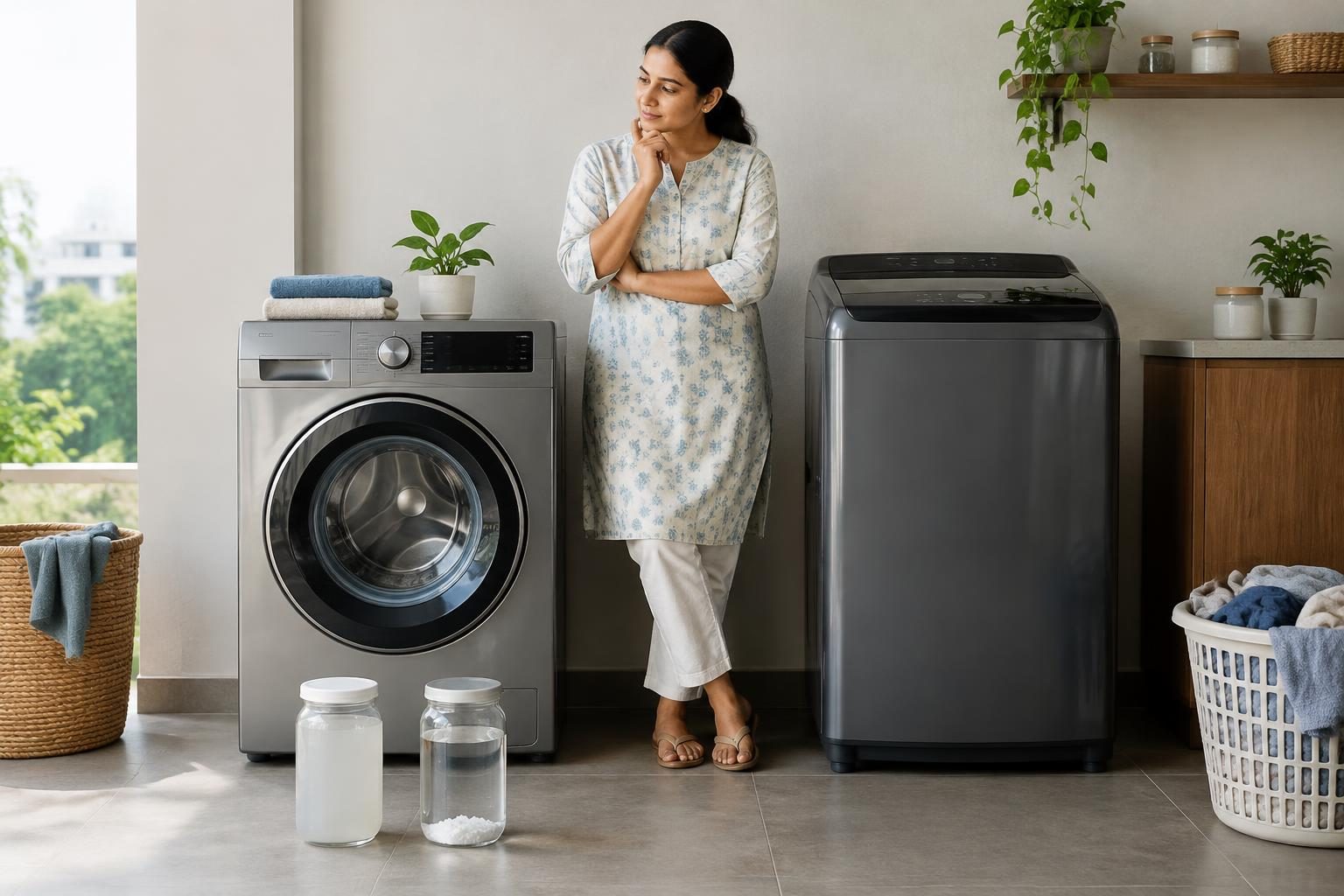
Front load washing machines generally outperform top load ones in regions with hard water by using less water per cycle and offering gentler fabric care. This lower water consumption helps limit mineral buildup inside the machine, making front loaders the preferred choice when maintenance is managed properly. However, top load machines may be better suited for larger loads, adding a factor to consider alongside hard water challenges.
Which washing machine type is better suited for hard water conditions, front load or top load?
Front load washing machines are typically better suited for hard water because of their lower water usage, which reduces mineral buildup inside the machine.
According to LG, front load washers generally use about 40–50 liters of water per cycle, whereas top load washers consume around 120–150 liters. This significant difference means that minerals dissolved in hard water are less concentrated inside front loaders, lowering the risk of scaling and deposits. Top load machines usually have larger drums and higher load capacities, which can be an advantage for washing bulky or larger loads, but their higher water consumption may increase mineral accumulation challenges.
Does hard water affect the cleaning performance of front load and top load washing machines differently?
Yes, hard water can influence cleaning performance differently, with front load washers generally rinsing more effectively than top load washers.
Hard water tends to reduce detergent effectiveness and can leave mineral residues on fabrics after washing. Front load washers typically spin at higher speeds—about 1,400 to 1,600 RPM—helping remove more water and detergent, which aids in rinsing away minerals. Meanwhile, top load washers spin slower, around 600 to 800 RPM, which might lead to less effective rinsing. Additionally, agitator-based top loaders can be harsher on clothes, potentially increasing wear, especially when residual hard water deposits remain.
Which washing machine uses less water and energy in hard water areas?
Front load washing machines use less water and energy, making them more efficient and potentially more suitable for areas with hard water.
Front load models are designed to minimize water consumption per cycle, typically requiring significantly less water than top load washers. This aspect not only lowers water bills but also reduces the overall exposure to hard water minerals within the machine. Using less water can help mitigate scale buildup over time. In contrast, top load washing machines generally consume more water and energy, which may increase operational costs in hard water regions.
How does hard water impact the lifespan and maintenance needs of front load versus top load washing machines?
Hard water causes mineral deposits inside both front and top load machines, but their maintenance needs differ somewhat.
Front load washers have seals and gaskets that may require more frequent cleaning to prevent mold and mineral buildup in hard water areas, due to their design and lower water volume. Top load washers, which often use more water and have agitators, may face more mechanical wear over time in mineral-rich water, though clear data on comparative long-term durability is limited. Both machine types benefit from regular descaling and use of water-softening detergents to prolong lifespan. There is currently a lack of region-specific studies on how hard water uniquely affects the durability of either machine type in India or similar markets.
Do front load and top load washing machines require different detergents or additives for hard water?
Both front load and top load washers perform better with detergents formulated for hard water, but their detergent needs vary slightly.
Front load machines benefit from low-foam, high-efficiency detergents that help prevent buildup inside the drum and seals. Top load washers may require detergents that can address higher soils and mineral content, often in larger amounts due to increased water usage. Using water softeners or additives designed to counteract mineral effects is advisable for both types to improve washing results and protect the appliance.
How does hard water influence fabric care differences between front load and top load machines?
Hard water affects fabric care in all machines, but front load washers generally offer gentler treatment of clothes compared to agitator-based top loaders.
Front loaders use tumbling action that is less abrasive than the agitator mechanism found in many top load washers. Although minerals in hard water can cause fabrics to feel stiff or develop residue regardless of machine type, the more effective rinsing and gentler wash action of front loaders can reduce visible fabric wear. Top load washers with agitators may contribute to more physical fabric stress, which combined with mineral deposits could accelerate issues like pilling or fading.
| Aspect | Front Load | Top Load |
|---|---|---|
| Water Usage | 40–50 liters per cycle (low) | 120–150 liters per cycle (high) |
| Energy Efficiency | Higher (due to less water and electricity used) | Lower (greater water and energy consumption) |
| Cleaning Performance in Hard Water | Better rinsing with higher spins (1,400–1,600 RPM) | Lower spin speed (600–800 RPM); harsher fabric action |
| Maintenance | Needs frequent gasket and drum cleaning to avoid mineral buildup | Potential for accelerated wear on agitators and parts with mineral deposits |
| Detergent Needs | Low-foam, HE detergents preferred | Stronger deters or higher quantities needed; water softeners helpful |
| Fabric Care | Gentler on fabrics; less wear and fading | More abrasive; possible increase in pilling and stiffness |
| Load Capacity | Generally smaller drum capacity | Typically larger drum capacity, better for bigger loads |
Frequently asked questions
Which type of washing machine is better for hard water conditions, front load or top load?
Front load washing machines are usually better for hard water areas because they use less water, which helps reduce mineral deposits and offers gentler cleaning. However, top load washers might suit those with larger laundry loads.
Does hard water affect the cleaning performance of front load and top load washing machines differently?
Yes. Front load washers typically spin faster and use less water, improving rinsing and reducing residue. Top load washers, especially with agitators, may leave more mineral deposits on clothes in hard water conditions.
Are there special maintenance tips for washing machines used in hard water areas?
Regular use of descaling agents and water softeners, combined with cleaning seals and drums, helps prevent scale buildup in both front and top loaders. Maintenance frequency may be higher in hard water regions.
What types of detergents work best for hard water in front load and top load washers?
Front load washers perform best with low-foam, high-efficiency detergents, while top load washers often need detergents designed for hard water and higher soil levels, sometimes in larger quantities.
Can hard water cause faster wear and tear on washing machines and clothes?
Yes, mineral deposits from hard water can accumulate inside washing machines, potentially shortening their lifespan. Fabrics may also stiffen and experience more wear, particularly with agitator-based top load washers.
The bottom line
Front load washing machines generally offer advantages for hard water areas including lower water and energy use and gentler fabric care, helping limit mineral buildup effects. Top load washers provide larger drum capacity suited for bigger laundry loads but may face more challenges with water and energy consumption in hard water. Both types require routine maintenance and appropriate detergents to handle hard water effectively.
For more guidance on affordable washing machines suited to India’s conditions, see our Best Washing Machines Under ₹30,000 in India. To understand regional water issues that affect appliance use, review Key Initiatives in Tamil Nadu Influencing Water and Appliance Usage.
Sources & methodology
We reviewed the primary references below when checking the time-sensitive facts in this guide. Product features, prices, rules and eligibility can change, so confirm important details with the linked authority before acting.
- Front-Load vs Top-Load Washing Machines | LG STORY www.lg.comFront-load washing machines typically use 40–50 liters of water per cycle, while top-loaders use 120–150 liters. Front-loaders spin at 1,400–1,600 RPM, reducing drying time, whereas top-loaders spin at 600–800 RPM. Front-loaders are gentler on fabrics, reducing wear over time. Top-loaders with agitators can be harsher on clothes, leading to pilling and fading. Top-loaders with impellers are gentler but still use more water than front-loaders. Front-loaders are stackable, saving space, while top-loaders are not. High-efficiency detergents are required for front-loaders but not for top-loaders. ([lg.com](https://www.lg.com/ae/lg-story/helpful-guide/front-load-vs-top-load-washing-machines?utm_source=openai))
- Top Load vs Front Load Washer: Which One is for You? | LG US www.lg.comTop-load washers typically offer larger load capacities due to a wider drum. Front-load washers generally have smaller capacities. Top-load washers traditionally use more water and energy compared to front-load washers. Front-load washers typically use less energy and water. Front-load washers typically offer superior cleaning performance. ([lg.com](https://www.lg.com/us/experience/choosing-top-load-front-load-washer?utm_source=openai))
- Front Load vs. Top Load Washers: Which Is Better? | Whirlpool www.whirlpool.comFront-load washers are designed to use less water, even though they have slightly longer cycle times. Front-load washers also often have faster spinning speeds that expel more water from clothing, so drying times tend to be shorter. Top-load washers tend to use more water but can have faster cycles than those of a front-load washer. Whether you opt for a top-load or front-load washer, you may find models with eco-friendly cycles and settings that help you save water. For instance, Whirlpool brand offers ENERGY STAR® Certified washers that exceed government standards to help conserve natural resources and save money on your utility bills. ([whirlpool.com](https://www.whirlpool.com/blog/washers-and-dryers/top-load-vs-front-load.html?utm_source=openai))