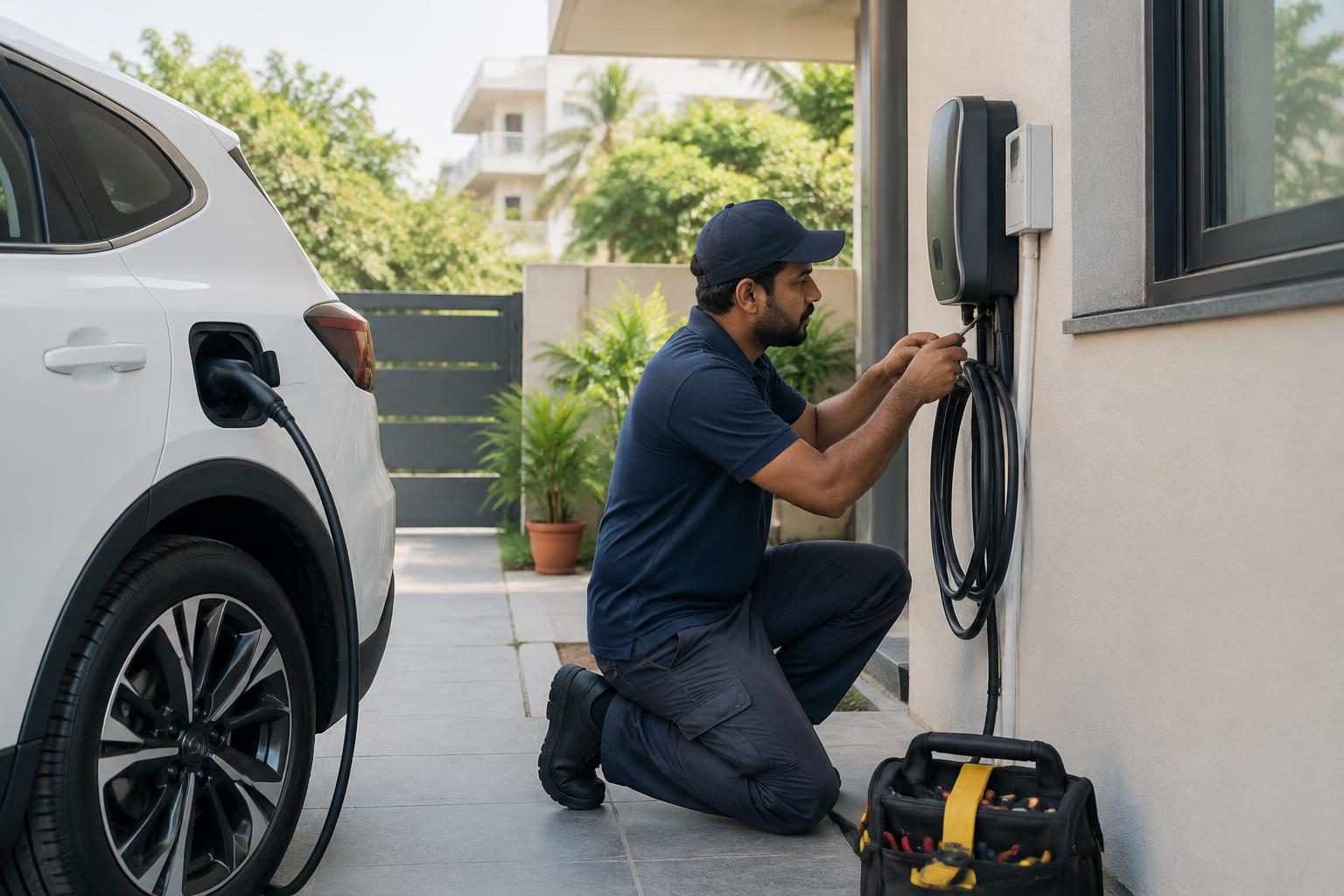
EV Charging in an Apartment: Permissions and Installation Questions
Installing EV charging in apartments requires permission from building management and compliance with local regulations. UK and US laws protect resident rights, while India lacks uniform policies.
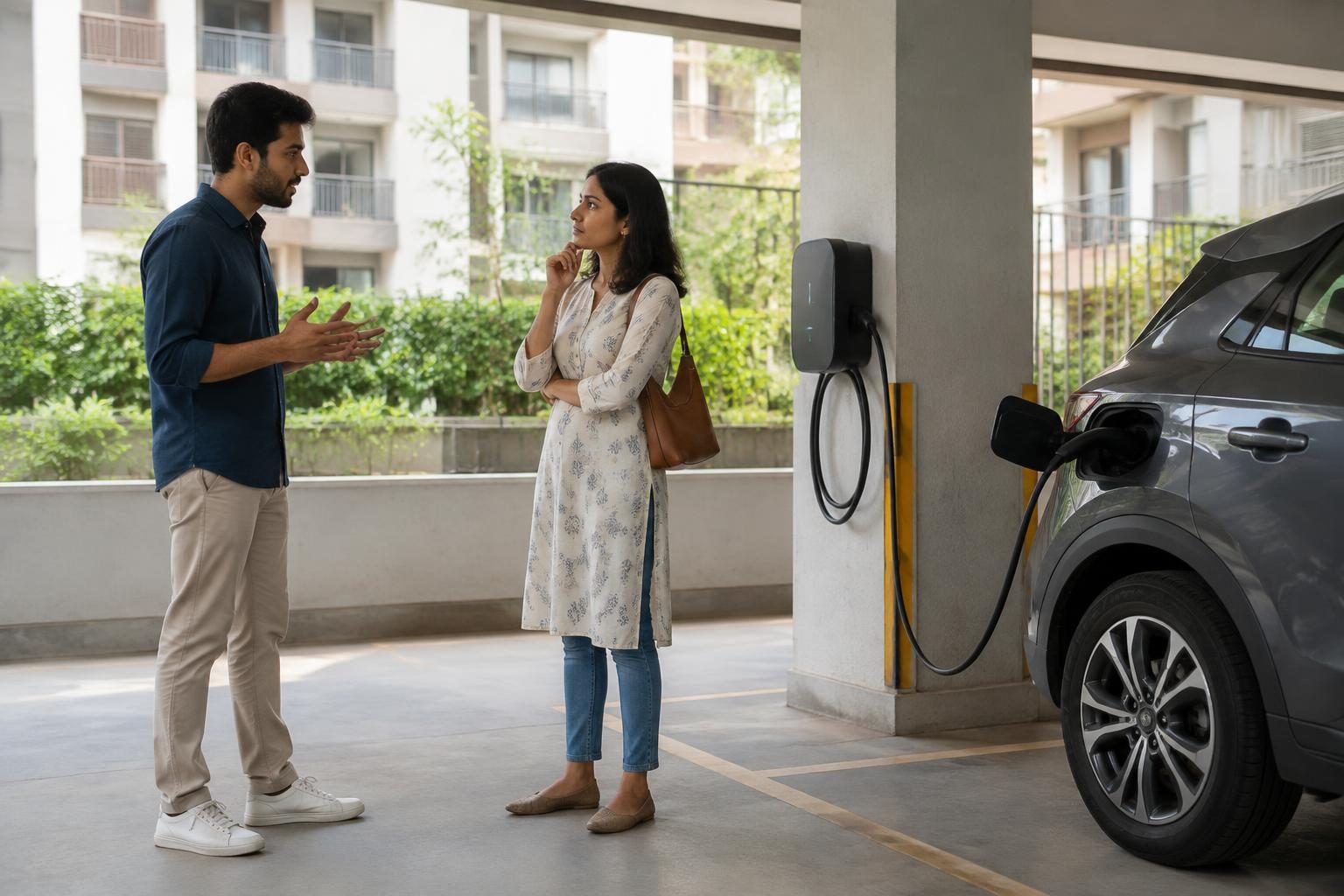
Contents
- Do apartment residents need permission to install EV charging points?
- What legal and technical standards affect EV charger installation in apartments?
- Can EV chargers be installed in common areas if individual parking spaces are unavailable?
- What are common challenges and solutions when installing EV charging in apartments?
- Are planning permissions required for EV chargers in heritage or listed apartment buildings?
- How do regulations in the UK and US compare for EV charging in multifamily dwellings?
- What steps should apartment residents follow to get EV charging installed?
- Frequently asked questions
- The bottom line
- Sources & methodology
Installing EV charging in an apartment generally requires permission from building management or homeowners associations and adherence to local regulations and safety standards. In the UK and US, residents have legal protections to install EV chargers at their designated parking spaces, although procedural requirements and permissions differ. In India, formal rules and infrastructure for EV charging in apartments are not yet clearly established and vary by locality.
Do apartment residents need permission to install EV charging points?
Yes, most apartment residents must seek permission from building management or homeowners associations before installing EV charging points.
In multifamily housing, modifications to common property or electrical systems typically require consent from landlords, condominium boards, or property managers.
According to the US Alternative Fuels Data Center, apartment and condominium residents cannot be prohibited from installing EV chargers in their designated parking spaces. However, property owners may impose reasonable restrictions that do not significantly increase costs or reduce charging efficiency.
In the UK, flats and maisonettes usually require approval from property owners or planning permission for EV charger installation. This is especially true for listed buildings or those in conservation areas where special permissions are needed to protect historic or architectural character, as noted by Westmorland and Furness Council.
For India, there are currently no uniform, nationally adopted regulations specifically governing permissions for EV charger installation in apartments. Requirements and processes can vary by state or municipality. Residents are advised to consult local housing authorities and municipal offices for guidance.
What legal and technical standards affect EV charger installation in apartments?
EV charger installations must comply with local electrical and building safety regulations to ensure safe operation and compatibility.
In the UK, EV chargepoints must meet standards such as BS EN 61851 (Electric vehicle conductive charging system), the IET Wiring Regulations (BS 7671), and the IET Code of Practice for Electric Vehicle Charging Equipment Installations. These specify safety, performance, and wiring requirements, outlined in UK government guidance.
Installations must also satisfy building regulations designed to prevent electrical hazards and fires.
In the US, requirements vary by state, but installations generally follow the National Electrical Code (NEC) and relevant state electrical codes for safety. Certified electricians ensure compliance with these codes during installation.
India currently lacks standardized technical regulations explicitly for EV charger installations in apartments. General electrical safety laws and wiring standards apply. Engaging licensed electricians is recommended to ensure safe, code-compliant setups.
Can EV chargers be installed in common areas if individual parking spaces are unavailable?
Yes, with building authorization, EV chargers may be installed in common areas when installation at individual parking spaces is not feasible.
The US allows such common area installations subject to reasonable conditions ensuring fair access and avoiding disproportionate costs, as described by the Alternative Fuels Data Center. Typically, resident agreements cover shared use and cost allocation.
In the UK, common area charging points often involve dedicated electrical connections and cabling routes from metered supply points within buildings to shared parking zones, as explained in official UK specifications.
At present, India has no widely adopted formal schemes or infrastructure specifically for shared EV charging in apartment common areas.
What are common challenges and solutions when installing EV charging in apartments?
Challenges include obtaining management approval, limited electrical infrastructure capacity, and navigating shared parking arrangements.
- Permission from property managers or owners is often the first hurdle.
- Electrical systems may need upgrades to safely handle EV charger loads.
- Parking configurations can complicate cable routing and user access to charging stations.
Solutions include negotiating with property management to establish acceptable installation terms, exploring shared or community charging stations to optimize resources, and consulting qualified electricians to evaluate and enhance electrical capacity. Being aware of planning permissions, safety codes, and resident rights reduces disputes and simplifies the process.
Are planning permissions required for EV chargers in heritage or listed apartment buildings?
Yes, in the UK, planning permission is generally required to install EV charging points in flats within listed buildings or conservation areas. Planning authorities review proposals to protect historic appearance and integrity.
Installations in such cases may require custom designs or discreet equipment to comply with heritage regulations, as noted by Westmorland and Furness Council.
Other countries may impose similar heritage-related rules, but requirements vary and should be checked locally.
How do regulations in the UK and US compare for EV charging in multifamily dwellings?
| Aspect | United Kingdom | United States |
|---|---|---|
| Permission | Often requires planning permission and owner/management approval, especially for flats and listed buildings | Requires owner or association approval; law prohibits unreasonable restrictions but allows reasonable conditions |
| Technical standards | Must comply with BS EN 61851, IET Wiring Regulations (BS 7671), and IET Code of Practice for EV installations | Must adhere to National Electrical Code (NEC) and local/state electrical codes, which vary |
| Common area charging | Possible with metered supply points and dedicated cable routes | Allowed with authorization, provided fair cost and access arrangements exist |
The UK places greater emphasis on formal planning permissions and adherence to British technical standards, while US regulations focus on preventing denial of EV charging and balancing reasonable installation conditions. Both prioritize electrical safety and efficient infrastructure usage.
What steps should apartment residents follow to get EV charging installed?
- Confirm you have a designated parking space or assess the need for common area charging.
- Request permission from your building management, landlord, or homeowners association with detailed installation information.
- Check if local planning permission or building code approval is required.
- Hire a certified electrician experienced in EV charger installations adhering to applicable standards.
- Explore options for shared or common-area charging if direct installation at your space is impractical.
Following these steps helps ensure installations meet legal, safety, and ownership requirements, reducing delays and disputes.
Frequently asked questions
Are there specific legal restrictions on installing EV chargers in flats or apartments in India?
India currently lacks nationally uniform regulations specifically addressing EV charger installations in apartments. Permission requirements and restrictions vary by local municipalities and housing societies. Residents should consult local authorities and property management for guidance.
What rights do apartment residents have if building management tries to restrict EV charger installations?
In the US and UK, while property managers can impose reasonable conditions for safety or cost concerns, they generally cannot unreasonably prohibit residents from installing EV chargers at their assigned parking spaces.
How can residents run charging cables from shared areas to their parking spaces safely and legally?
Cabling must comply with local building and electrical codes, using approved materials and installation methods. Residents should coordinate with property management and engage licensed electricians to ensure safe and compliant cable routing.
What typical costs or infrastructure requirements exist for installing EV chargers in apartment complexes?
Costs vary based on charger type, electrical panel upgrades, wiring complexity, and installation location. Infrastructure may require upgraded electrical capacity or new metered supply points. Getting professional quotes is recommended.
Can EV chargers be installed on-street or outside apartment buildings if on-site parking lacks charging?
Public or curbside charging stations may be provided by local governments or utilities, depending on the region. Residents without on-site charging often rely on these shared public chargepoints.
The bottom line
Installing EV charging in apartments involves permission from property management and compliance with applicable safety and technical standards. The UK and US have established legal frameworks supporting resident rights with some procedural differences, while India currently lacks unified policies in this area. Careful planning, consultation, and professional installation can make the process smoother and ensure safe, reliable EV charging.
For more on EV charging tailored to India, see our guides on the best home EV chargers in India for 2025 and a petrol vs electric car ownership cost comparison in India.
Sources & methodology
We reviewed the primary references below when checking the time-sensitive facts in this guide. Product features, prices, rules and eligibility can change, so confirm important details with the linked authority before acting.
- Electric Vehicle (EV) charging www.westmorlandandfurness.gov.ukIn the UK, installing an EV charging point at a house with off-street parking is generally permitted development, meaning no planning permission is required. However, this does not apply to flats or maisonettes. For properties without off-street parking, installing a charge point on the public highway requires planning permission. Additionally, if the property is a flat, listed building, or located in a conservation area, planning permission may be necessary. It's also important to ensure that charging cables are not run across the pavement without permission.
- Electric vehicle chargepoint and infrastructure specifications www.gov.ukIn the UK, chargepoints must be installed on residential properties and comply with specific standards, including BS EN 61851, the IET Wiring Regulations (BS 7671), and the IET Code of Practice for Electric Vehicle Charging Equipment Installations. The installation must also meet electrical safety provisions under relevant building regulations. For households with on-street parking, the charging infrastructure must include a new electrical connection at a metered supply point, a dedicated route for electrical cabling to all installed chargepoints, and appropriate power for all chargepoints and future connection locations.
- Electric Vehicle (EV) Charger Policies for Multifamily Housing afdc.energy.govIn the United States, common interest developments, including apartments and condominiums, cannot prohibit or restrict the installation or use of EV chargers in a homeowner’s designated parking space. These entities may impose reasonable restrictions, provided they do not significantly increase the cost or decrease the efficiency of the EV chargers. If installation in the designated parking space is not possible, with authorization, the homeowner may install EV chargers in a common area, subject to certain conditions.