Dishwasher for Indian Utensils: Loading, Capacity and Cleaning Limits
Dishwashers can clean stainless steel Indian utensils like kadais and pressure cookers effectively without pre-rinsing by proper loading and using suitable detergents and temperature cycles.
Contents
- Can dishwashers effectively clean commonly used Indian utensils like kadais and pressure cookers?
- What is the correct way to load Indian utensils in a dishwasher for optimal cleaning?
- Do Indian utensils require pre-rinsing before placing them in a dishwasher?
- Which types of Indian utensils are safe to clean in a dishwasher, and which are not?
- How does the dishwasher handle residues like masala, ghee, and sauces on Indian utensils?
- What is the importance of dishwasher detergent and temperature cycles in cleaning Indian utensils?
- How does the capacity of dishwashers affect cleaning multiple or larger Indian utensils in one cycle?
- What are the limitations of dishwashers when cleaning Indian utensils with heavy or dried-on food residue?
- Comparison Table: Indian Utensil Materials and Dishwasher Compatibility
- Frequently asked questions
- The bottom line
- Sources & methodology
Dishwashers clean Indian utensils, including stainless steel kadais and pressure cookers, effectively without the need for pre-rinsing, provided they are loaded correctly to ensure spray arms reach all surfaces. Utensils made from aluminum, cast iron, or with non-stick coatings should be washed by hand to avoid damage. Using appropriate dishwasher detergents and high-temperature cycles helps remove typical Indian food residues such as masala, ghee, and sauces.
Can dishwashers effectively clean commonly used Indian utensils like kadais and pressure cookers?
Yes, dishwashers clean Indian cookware made of dishwasher-safe materials such as stainless steel effectively. This includes utensils like kadais and pressure cookers if they are constructed with appropriate materials. However, utensils with heavy soil or dried-on food might require soaking or manual pre-scraping of large food particles before loading.
According to Glen India, dishwashers can handle these stainless steel utensils well, maintaining their cleanliness and durability when used properly (source).
What is the correct way to load Indian utensils in a dishwasher for optimal cleaning?
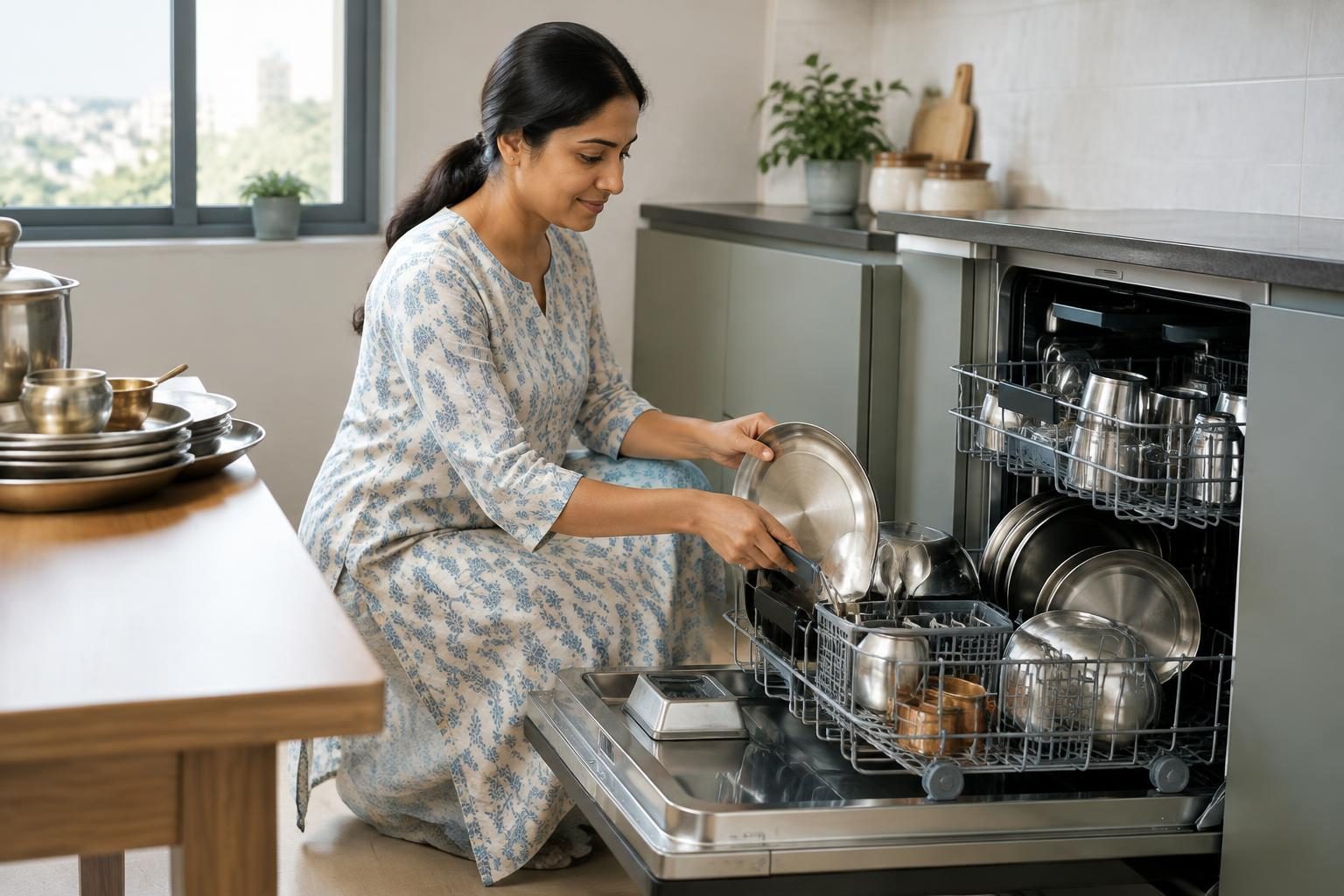
Correct loading is key to thorough cleaning. Before placing utensils in the dishwasher, scrape off solid food residues with a spatula or spoon. Pre-rinsing with water is generally unnecessary. Load utensils so the dishwasher spray arms can reach all surfaces, avoiding blockage by larger items. Large kadais or pressure cooker parts should be arranged thoughtfully to maximize exposure to water jets.
Novak India emphasizes that proper loading ensures effective cleaning by maximizing spray arm reach and spray coverage (source).
Do Indian utensils require pre-rinsing before placing them in a dishwasher?
Pre-rinsing Indian utensils is not required. Dishwashers use detergents formulated to handle residues such as masala, ghee, and sauces, combined with high-temperature cycles around 70°C. Removing solid debris by scraping is recommended, but rinsing off liquid residues wastes water and reduces detergent effectiveness.
This approach is confirmed by Novak India, which advises scraping solids but no pre-rinsing for best results (source).
Which types of Indian utensils are safe to clean in a dishwasher, and which are not?
Stainless steel utensils including kadais, pressure cookers, and pots are safe in dishwashers. In contrast, aluminum, cast iron, and non-stick coated utensils should not be cleaned in dishwashers. The harsh detergents and high heat in dishwashers can cause discoloration, damage, or loss of coating on these materials.
Glen India advises hand washing these sensitive materials to prolong their lifespan and maintain cooking performance (source).
How does the dishwasher handle residues like masala, ghee, and sauces on Indian utensils?
Dishwasher detergents combined with high water temperature cycles around 70°C efficiently tackle oily and spicy residues common in Indian cooking. The detergents break down fats and stuck-on masala while the hot water sanitizes. Effective cleaning requires that utensils are loaded properly to expose all sides to water jets.
Novak India highlights that the dishwasher’s combination of detergent and temperature is designed specifically to work on these residues without pre-rinsing (source).
What is the importance of dishwasher detergent and temperature cycles in cleaning Indian utensils?
Detergents formulated to remove grease and starch play a crucial role in breaking down Indian cooking residues like ghee and masala. Higher temperature cycles, near 70°C, enhance cleaning power by dissolving oils and sanitizing utensils, which is especially important for oily Indian food residues.
Novak India emphasizes the need for using appropriate detergents and selecting high-temperature cycles for best results (source).
How does the capacity of dishwashers affect cleaning multiple or larger Indian utensils in one cycle?
Dishwasher capacity impacts the ability to clean bulky Indian utensils efficiently. Larger or multiple pieces, such as large kadais or pressure cooker parts, need careful placement to avoid overcrowding and ensure all surfaces are reached by spray arms. Dishwashers with adjustable racks or larger capacity models suit Indian kitchens where heavier and bulkier utensils are common.
No specific data exists exclusively for Indian cookware capacity needs, but usual dishwasher capacities apply, with proper loading strategy being more important than size alone.
What are the limitations of dishwashers when cleaning Indian utensils with heavy or dried-on food residue?
Heavy, crusted, or dried-on food residue may require manual soaking or scrubbing before placing utensils in the dishwasher to achieve optimal results. Dishwashers might struggle with hard, caked-on food if utensils are overloaded or detergent strength is insufficient. Frequent dishwasher use may also accelerate wear of some materials.
Comparison Table: Indian Utensil Materials and Dishwasher Compatibility
| Material | Dishwasher Safe? | Cleaning Notes | Recommended Washing Method |
|---|---|---|---|
| Stainless Steel (e.g., kadais, pressure cookers) | Yes | Effective cleaning; resists staining and corrosion | Dishwasher with proper loading and detergent |
| Aluminum | No | Prone to discoloration and dullness | Hand wash with mild detergent |
| Cast Iron | No | Dishwasher damages seasoning and rusts | Hand wash and dry thoroughly |
| Non-stick Coated Cookware | No | Coating can wear down from heat and detergent | Hand wash gently with non-abrasive sponge |
Frequently asked questions
Are there specific dishwasher cycles recommended for Indian cooking residues?
Yes, selecting a high-temperature cycle around 70°C combined with a detergent formulated for grease removal works best for masala, ghee, and sauce residues typical in Indian cooking.
Can using a dishwasher affect the longevity of stainless steel Indian cookware?
Stainless steel Indian cookware generally withstands dishwasher use well if correctly loaded and maintained, but frequent dishwasher cycles can lead to gradual dulling of the finish over time.
Is it safe to wash non-stick Indian utensils in a dishwasher occasionally?
While occasional dishwasher use for non-stick utensils is possible, it is not recommended because harsh detergents and heat can degrade the coating faster. Hand washing is preferable for longevity.
What steps help prevent damage to delicate Indian utensils during dishwashing?
Scrape solids before loading, avoid overcrowding, use gentle detergent cycles if available, and never wash aluminum, cast iron, or non-stick utensils in the dishwasher.
How to load pressure cooker lids and seals properly in a dishwasher?
Remove rubber seals from pressure cooker lids before dishwasher use and hand wash them to maintain elasticity. Place lids on the top rack ensuring spray arms can reach all surfaces without obstruction.
The bottom line
Dishwashers are effective for cleaning stainless steel Indian utensils like kadais and pressure cookers when loaded correctly and using suitable detergents and temperature cycles. Avoid dishwashing aluminum, cast iron, and non-stick materials to prevent damage. Proper scraping and arranging of utensils maximize cleanliness and protect cookware.
For wider kitchen appliance advice, see our Best Washing Machines Under ₹30,000 in India: Reliable Models & Tips and learn about regional contexts in Tamil Nadu India: Northeast Monsoon, Culture, Economy & Tourism Guide 2026.
Sources & methodology
We reviewed the primary references below when checking the time-sensitive facts in this guide. Product features, prices, rules and eligibility can change, so confirm important details with the linked authority before acting.
- How to Load a Dishwasher with Indian Utensils — The Right Way novakindia.comProper loading of a dishwasher is crucial for effective cleaning, especially with Indian utensils. Before loading, it's recommended to scrape off solid food residues using a spatula or spoon, as pre-rinsing is unnecessary and wastes water. Liquid residues, such as masala, ghee, and sauces, do not need to be rinsed; the dishwasher's detergent and high-temperature cycle (70°C) are designed to handle these. Correct loading ensures that spray arms can reach all surfaces, leading to better cleaning results.
- Do Dishwashers Actually Clean Indian Utensils Like Kadai & Pressure Cookers? glenindia.comDishwashers can effectively clean Indian utensils, including kadais and pressure cookers, provided they are made of dishwasher-safe materials like stainless steel. The cleaning effectiveness depends on the dishwasher's program, loading method, detergent used, and the nature of the residue. For instance, stainless steel kadais can be cleaned effectively, while materials like aluminum, cast iron, and non-stick should be hand-washed to prevent damage.