Medicines on International Flights: Documents and Packing Checklist
Carry medicines on international flights by keeping them in labeled containers with prescriptions, doctor’s letters, and by following airline and destination rules.
Contents
- What documents are required to carry medicines on international flights?
- Are there limits on the quantity and types of medicines you can carry?
- How should medicines be packed for airline security and safety?
- Do regulations for carrying medicines differ by country or airline?
- Is a doctor's prescription or letter necessary for carrying prescription medicines internationally?
- Can over-the-counter medicines be carried without special documentation?
- What should Indian travelers do differently regarding medicines on international flights?
- Frequently asked questions
- The bottom line
- Sources & methodology
Travelers can carry medicines on international flights by packing them in original, clearly labeled containers and carrying original prescriptions along with a doctor’s letter explaining medical necessity. It is important to follow airline and regulatory quantity limits and check the specific import regulations of the destination country to ensure compliance and smooth passage through customs.
What documents are required to carry medicines on international flights?
Carrying original prescriptions and keeping medicines in labeled containers are essential documents for traveling with medicines internationally.
- Original prescriptions prove the medicines are for personal use.
- A doctor’s letter explaining the medical condition and need for the medication helps avoid customs delays or confiscation.
- Some countries may require additional documents or import permits for controlled substances; always verify destination rules before travel.
Are there limits on the quantity and types of medicines you can carry?
Yes, quantity and packaging limits vary by jurisdiction and regulations.
- Under U.S. Federal Aviation Administration (FAA) rules, medicinal and toiletry articles carried by an individual must not exceed a total aggregate of 2 kilograms (70 ounces) or 2 liters (68 fluid ounces), and no single container can exceed 0.5 kilograms (18 ounces) or 500 milliliters (17 fluid ounces) (FAA PackSafe).
- These FAA limits apply to flights under U.S. jurisdiction and may not reflect rules in other countries.
- Different countries and airlines may have unique quantity, packaging, and type restrictions, so always check the airline’s requirements and destination customs rules before travel.
How should medicines be packed for airline security and safety?
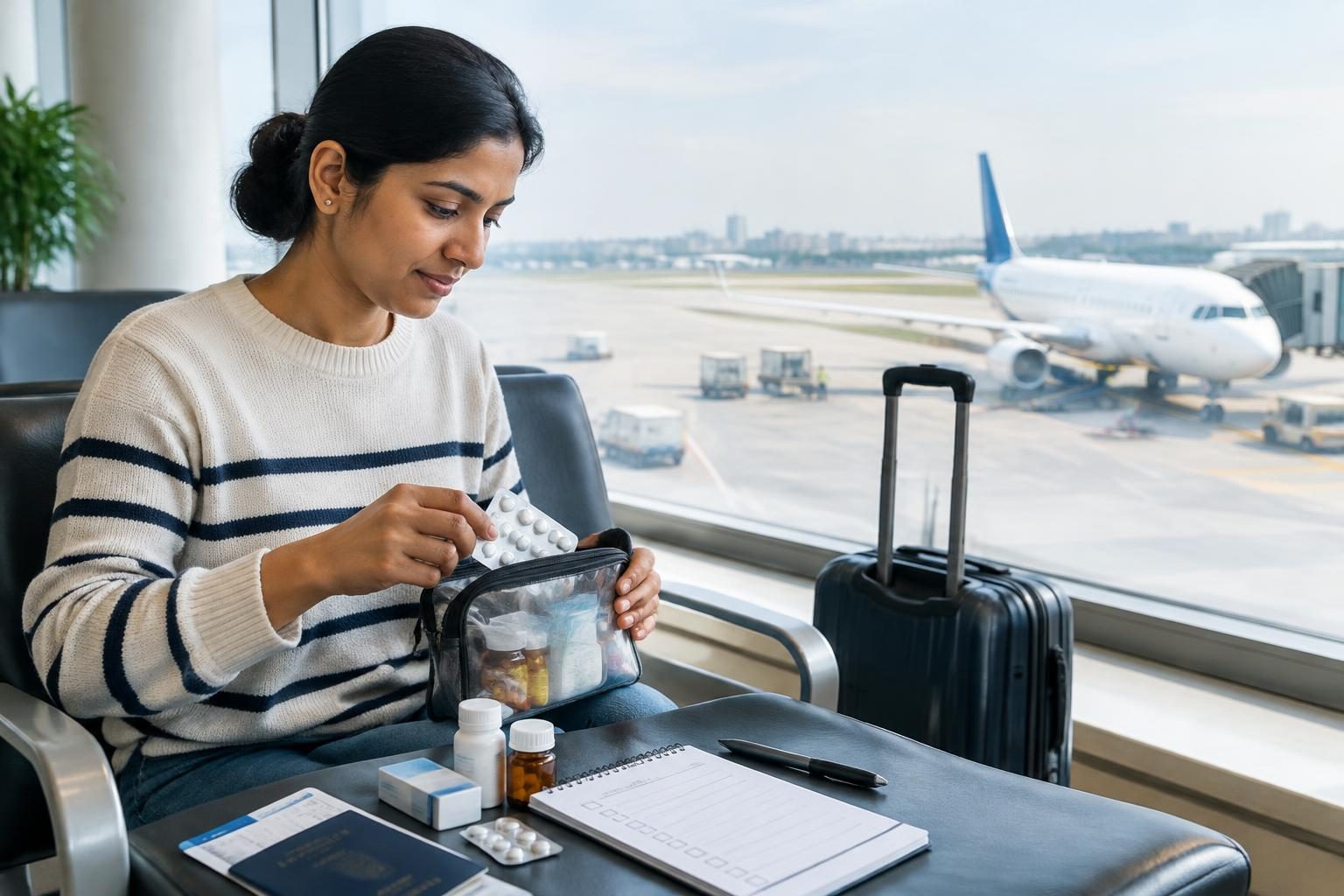
Medicines should be carried in their original, clearly labeled containers to facilitate security screening and avoid confusion.
- Medicinal aerosol release devices must be capped or otherwise secured to prevent accidental discharge during the flight (FAA PackSafe).
- When possible, pack medicines in carry-on baggage to reduce the risk of loss and maintain better temperature control, though airline policies can vary.
- Check for any airline-specific rules on packing medicines, especially aerosols or temperature-sensitive drugs.
Do regulations for carrying medicines differ by country or airline?
Yes, rules vary between countries and airlines.
- Some countries restrict or prohibit certain medicines that might be legal in your origin country.
- Check customs and import laws for your destination country well ahead of travel.
- Airlines may impose additional restrictions or require notification about carrying medicines; verify these details before your flight.
Is a doctor's prescription or letter necessary for carrying prescription medicines internationally?
Yes, it is strongly recommended to carry original prescriptions and a doctor’s letter explaining your medical condition and the need for the medication.
- This documentation can help avoid confiscation or delays, especially with controlled or narcotic medicines.
- A doctor’s letter serves as proof of legitimate personal use when questioned by customs or law enforcement abroad (U.S. Department of State Medicine and Health).
Can over-the-counter medicines be carried without special documentation?
Generally, common over-the-counter (OTC) medicines do not require prescriptions or special documentation.
- Keep OTC medicines in their original packaging to facilitate security checks.
- Check the destination country’s regulations, as some OTC medicines may be restricted or banned.
What should Indian travelers do differently regarding medicines on international flights?
Indian travelers should pay special attention to verifying medicine import regulations for their destination and carry necessary documentation.
- Verify destination-specific medicine import rules via official embassy or government websites before travel.
- Carry original prescriptions and doctor’s letters explaining medical necessity to ease customs clearance.
- Declaring controlled or narcotic medicines at customs is important to comply with destination rules.
- For temperature-sensitive medicines, consider options such as carrying cool packs and consulting with the airline about in-flight storage arrangements, recognizing that specific guidelines may vary and require confirmation directly from the airline.
Frequently asked questions
What additional checks should Indian travelers do regarding medicines for their destination?
Indian travelers should research the import policies for medicines of their destination country through official embassy or government websites to avoid confiscation or fines.
Are certain medications prohibited at international destinations even if legal in the country of origin?
Yes, some destinations restrict or ban medicines not locally approved. Travelers should verify and comply with destination-specific import rules before traveling.
What should travelers do if their medicine contains aerosols?
Medicinal aerosol devices must be capped or protected to prevent accidental release during transport. Follow airline and regulatory guidelines for packing such items safely (FAA PackSafe).
How can travelers avoid issues with customs when carrying medicines abroad?
Carry medicines in labeled containers, bring original prescriptions and a doctor’s letter, and declare controlled substances at customs. Research destination-specific regulations beforehand to ensure compliance.
Is it better to carry medicines in carry-on or checked baggage?
Carrying medicines in carry-on baggage is generally recommended to reduce risk of loss and better manage temperature-sensitive drugs. However, check with your airline for specific policies.
The bottom line
When traveling internationally with medicines, carry original prescriptions and doctor’s letters, pack medicines in their labeled containers, and follow quantity limits established by applicable regulations. Always verify airline policies and the import rules of your destination to avoid customs issues. Indian travelers should carefully check destination-specific rules and declare controlled medicines to ensure hassle-free travel.
For additional travel preparation, Indian travelers may find useful our Complete planning guide for your first international trip from India, International travel insurance guide for Indian travelers, and Packing checklist including documents and essentials for Indian travelers to Europe.
Sources & methodology
We reviewed the primary references below when checking the time-sensitive facts in this guide. Product features, prices, rules and eligibility can change, so confirm important details with the linked authority before acting.
- PackSafe - Medicinal & Toiletry Articles | Federal Aviation Administration www.faa.govThe FAA allows passengers to carry medicinal and toiletry articles in both carry-on and checked baggage, provided certain conditions are met. The total aggregate quantity per person must not exceed 2 kg (70 oz) or 2 L (68 fl oz), with each container's capacity not exceeding 0.5 kg (18 oz) or 500 ml (17 fl oz). Aerosol release devices must be protected by caps or other suitable means to prevent accidental release. This exception includes items such as hair spray, perfumes, colognes, nail polish, rubbing alcohol, shaving cream, inhalers, medicines, and sunscreen. However, this does not cover radioactive materials. Passengers are advised to consult the FAA's PackSafe resources for detailed guidelines on traveling with hazardous materials. ([faa.gov](https://www.faa.gov/hazmat/packsafe/medicinal-toiletry-articles?utm_source=openai))
- Before Packing for a Flight, Read the Fine Print | Federal Aviation Administration www.faa.govThe FAA emphasizes the importance of understanding hazardous materials regulations when packing for air travel. While most hazardous materials are prohibited on passenger aircraft, certain items, including some medicines, are allowed under specific conditions. Passengers should be aware of the restrictions on items like lithium batteries, aerosols, flammables, and corrosives. The FAA provides resources such as the PackSafe chart to help passengers identify and pack items safely. It's crucial to check with the airline and the Transportation Security Administration (TSA) for any additional restrictions or requirements. ([faa.gov](https://www.faa.gov/blog/clearedfortakeoff/packing-flight-read-fine-print?utm_source=openai))
- International Traveler's Checklist | U.S. Department of State travel.state.govThe U.S. Department of State advises travelers to review the Health section of the Travel Information for their destination before traveling. This includes checking if certain prescription and over-the-counter medications are legal in the destination country, as some may be prohibited even if legal in the U.S. Travelers should bring copies of all prescriptions and labeled bottles. It's also recommended to have a letter from a doctor explaining the medical condition and the necessity of the medication. This documentation can help avoid potential issues with customs and law enforcement abroad. ([travel.state.gov](https://travel.state.gov/content/travel/en/international-travel/before-you-go/travelers-checklist.htmlhecklist.html?utm_source=openai))
- Medicine and Health | U.S. Department of State travel.state.govThe U.S. Department of State emphasizes the importance of understanding local medical services and health risks when traveling abroad. Travelers should review the Health information for their destination before traveling. This includes checking if certain prescription and over-the-counter medications are legal in the destination country, as some may be prohibited even if legal in the U.S. Travelers should bring copies of all prescriptions and labeled bottles. It's also recommended to have a letter from a doctor explaining the medical condition and the necessity of the medication. This documentation can help avoid potential issues with customs and law enforcement abroad. ([travel.state.gov](https://travel.state.gov/en/international-travel/planning/guidance/medicine-health.html?utm_source=openai))