Exercise Bike for Short Users: Seat Adjustment and Dimensions
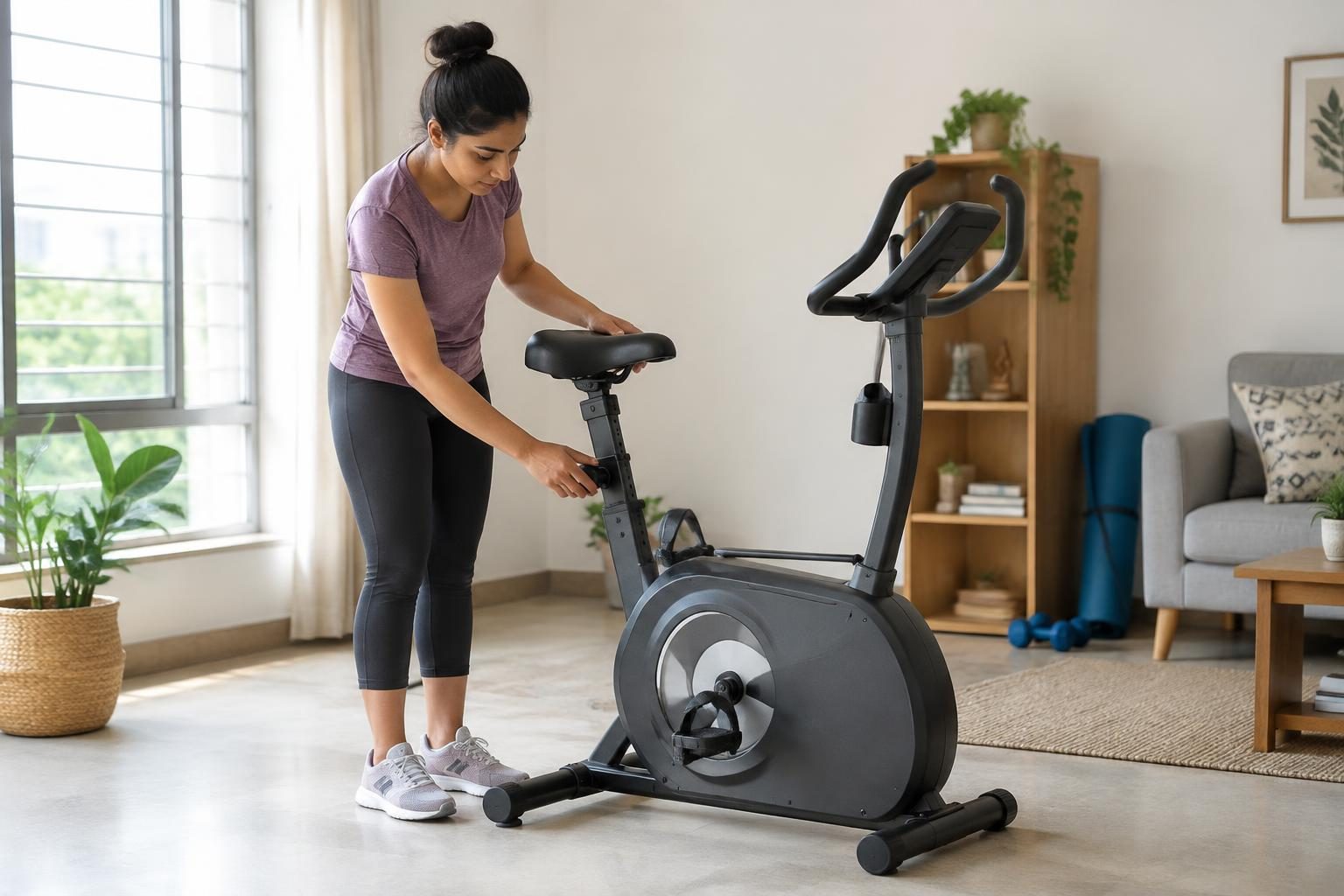
Short users should measure their inseam and adjust seat height and fore-aft position so the knee aligns over the pedal for comfort and efficient pedalling.
Contents
- How do I measure my inseam properly to fit an exercise bike?
- What is the correct seat height for short users on an exercise bike?
- How do I adjust the seat position for a better fit if I am short?
- Why is fore-aft seat adjustment important for short riders?
- How can seat adjustments reduce strain or discomfort for short users?
- Are there specific exercise bike models better suited for short people due to seat dimensions?
- How does handlebar reach relate to seat adjustment for short users?
- Frequently asked questions
- The bottom line
- Sources & methodology
Short users can achieve a comfortable and efficient workout on an exercise bike by carefully measuring their inseam and adjusting the seat height and fore-aft position accordingly. The seat should be set so that the knee has a slight bend of 5 to 10 degrees at the bottom of the pedal stroke, and the seat’s fore-aft position should align the front knee directly over the pedal axle. These precise adjustments help reduce strain, improve biomechanics, and enhance comfort during cycling.
How do I measure my inseam properly to fit an exercise bike?
To measure your inseam accurately, stand upright against a wall with your feet about hip-width apart. Place a hardcover book snugly between your legs, simulating a bike saddle. Then, use a tape measure to measure from the top edge of the book down to the floor. This inseam length is essential for setting the correct seat height on your exercise bike.
- Stand against a flat wall with feet hip-width apart.
- Place a hardcover book firmly between your inner thighs, mimicking a saddle.
- Measure from the top edge of the book straight down to the floor to get your inseam length.
This method is recommended by Ironcrest Fit and helps petite riders find an optimal starting point for seat height.
What is the correct seat height for short users on an exercise bike?
The correct seat height allows the leg to have a slight bend of about 5 to 10 degrees at the bottom of the pedal stroke. This slight knee bend is important to prevent joint strain and overextension while maintaining pedalling efficiency.
- A slight knee bend reduces strain on knees and joints.
- Supports smooth and efficient pedalling without overstretching.
- Adjust seat height based on inseam measurement to achieve this angle.
These ergonomic guidelines are supported by GymFix KE.
How do I adjust the seat position for a better fit if I am short?
Beyond seat height, fore-aft seat adjustment is key for short users. This involves moving the seat forward or backward so that the front knee is positioned directly over the center of the pedal axle when the crank arms are horizontal. Proper fore-aft adjustment balances pedalling efficiency and reduces the reach to the handlebars, improving overall comfort.
- Align your front knee over the pedal spindle at crank horizontal.
- Forward seat positioning can help decrease handlebar reach.
- Fine-tune fore-aft seat position for balanced posture and pedal stroke.
These steps are recommended by Ironcrest Fit and GymFix KE.
Why is fore-aft seat adjustment important for short riders?
Fore-aft seat adjustment is important because it helps maintain proper posture and knee alignment, optimizing pedalling efficiency. It also prevents overreaching, which can cause discomfort or strain in the shoulders, neck, and hands — common issues for riders with shorter limbs.
- Maintains knee alignment over pedals, reducing injury risk.
- Prevents excessive reach and poor upper-body posture.
- Enhances comfort and endurance during cycling sessions.
Ironcrest Fit highlights the importance of fore-aft adjustment for biomechanical efficiency.
How can seat adjustments reduce strain or discomfort for short users?
Properly adjusting seat height prevents knee hyperextension or excessive bending that can cause joint pain. Correct fore-aft positioning minimizes awkward postures by ensuring the rider does not have to lean forward or overreach, which reduces strain on the shoulders and neck. Adjusting the seat angle and height synergistically improves pedalling comfort and workout effectiveness.
- Proper seat height reduces joint strain and potential injuries.
- Fore-aft seat adjustment supports better posture and reduces upper-body strain.
- Better positioning allows for longer, more comfortable cycling sessions.
These benefits are noted by both GymFix KE and Ironcrest Fit.
Are there specific exercise bike models better suited for short people due to seat dimensions?
Currently, there is a gap in widely available product literature detailing seat height ranges and fore-aft adjustment specifications specifically designed for short users. Riders with shorter frames should verify a bike’s minimum and maximum seat height and its fore-aft adjustability before purchasing to ensure a proper fit. While some models may offer finer incremental adjustments, specific information on such features tailored for petite users is limited.
- Detailed seat dimension ranges for short users are not commonly published.
- Check manufacturer specifications for seat height and fore-aft adjustment ranges.
- Read user reviews from riders of similar height to gauge bike suitability.
How does handlebar reach relate to seat adjustment for short users?
Handlebar reach relates to seat adjustment because both affect rider posture and comfort. For short users, handlebar reach may need to be coordinated with seat positioning to avoid overreaching, which can lead to shoulder and neck strain. Many exercise bikes have adjustable handlebars, but if adjustment options are limited, moving the seat forward can help reduce the distance to the handlebars. Though there is a lack of empirical studies on exact handlebar reach settings for short users, ergonomic consensus suggests that coordinating these adjustments improves overall comfort.
- Proper handlebar reach improves upper body comfort and posture.
- Many bikes offer adjustable handlebars; where not available, seat positioning can compensate.
- Coordination between seat and handlebar setup is advisable based on ergonomic principles.
Frequently asked questions
What is the recommended starting point for seat height and fore-aft position for beginners who are short?
Start by measuring your inseam and setting the seat height so your knee bends about 5 to 10 degrees at the pedal’s lowest point. Adjust the seat forward or backward until your front knee aligns over the pedal axle when the cranks are horizontal. This setup offers a comfortable and effective baseline.
What seat angle or foot bend is recommended when pedaling on an exercise bike?
A slight knee bend of approximately 5 to 10 degrees at the bottom of the pedal stroke is recommended to minimize joint stress while maintaining power transfer.
How do seat adjustments improve comfort and reduce injury risk for short users?
Proper seat height and positioning keep knees, hips, and back aligned during cycling. This alignment helps reduce joint pain, prevents overreaching, and lowers the risk of repetitive strain injuries linked to poor posture.
Are there handlebar adjustment tips specifically for short exercise bike users?
Short users often benefit from lowering or shortening handlebar reach to avoid excessive stretching. Bikes with adjustable handlebars are preferable, but if adjustment is limited, moving the seat closer to the handlebars can help maintain comfort based on general ergonomic principles.
How can I check if an exercise bike’s seat dimensions will fit me before buying?
Review the manufacturer’s specifications for minimum and maximum seat height and fore-aft adjustability. Additionally, seek out user reviews from riders of similar stature to understand if the bike will offer a comfortable fit.
The bottom line
For short users, carefully measuring inseam length and adjusting an exercise bike’s seat height and fore-aft position are crucial for comfort and efficient pedalling. These adjustments help prevent strain and encourage proper biomechanics. Because detailed bike model data for petite riders is limited, prospective buyers should verify adjustment ranges before purchasing. Coordinating these seat settings with handlebar reach adjustments can further enhance riding comfort.
For more tips on home fitness equipment and comfort, see our guides on setting up a home gym under ₹10,000 and adjustable versus fixed dumbbells.
Sources & methodology
We reviewed the primary references below when checking the time-sensitive facts in this guide. Product features, prices, rules and eligibility can change, so confirm important details with the linked authority before acting.
- Best Exercise Bike for Short People: Fit First – Ironcrest ironcrest.fitThe article advises petite riders to measure their inseam by standing against a wall with feet about hip-width apart, placing a hardcover book snugly between their legs as if it were a bike saddle, and measuring from the top edge of the book to the floor. It also highlights the importance of fore-aft seat adjustment to position the knee over the pedal axle and reduce the reach to the handlebars.
- Exercise Bike Seat Adjustment | Correct Height & Position Guide | GymFix KE gymfix.co.keThis guide explains that when setting the correct seat height, your foot should have a slight bend (about 5-10 degrees) when at the bottom of the pedal stroke. It also discusses the importance of adjusting the seat's fore/aft position so that your front knee is directly over the center of the pedal when the cranks are horizontal.