Broadband Installation in a Rented Flat: Wiring and Permission Checklist
Installing broadband in a rented flat usually needs landlord permission for physical work like drilling or cable routing. FTTC often needs no consent, but FTTP requires landlord and managing agent approval.
Contents
- Do I need landlord permission to install broadband in a rented flat?
- What is a wayleave agreement and when is it required for broadband installation?
- How do FTTC and FTTP broadband installations differ in permission requirements?
- What are the steps and time involved in a full fibre broadband installation in a rented flat?
- How can tenants avoid conflicts with landlords over broadband installation?
- Are there technical considerations for Wi-Fi coverage in rented flats?
- Frequently asked questions
- The bottom line
- Sources & methodology
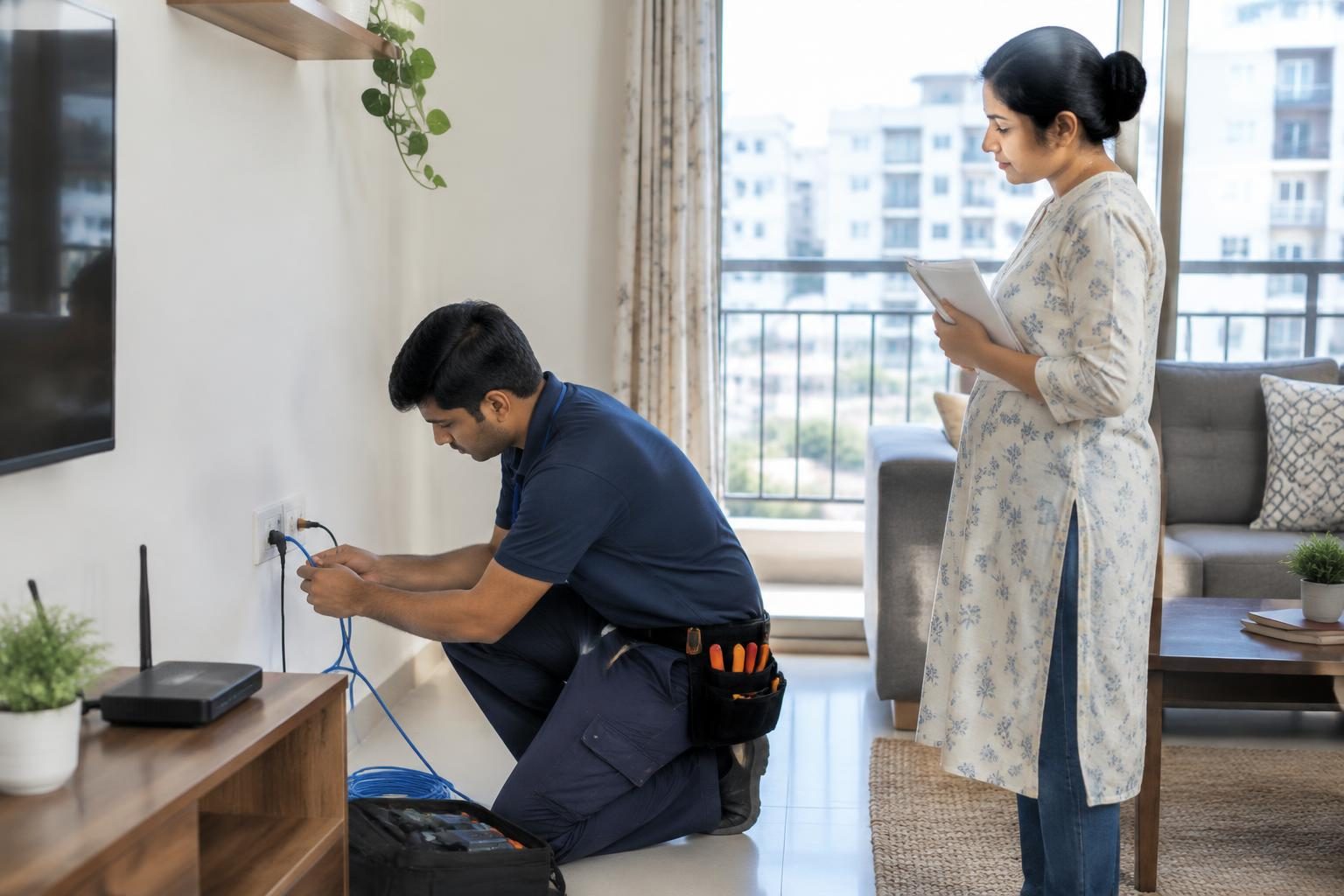
Installing broadband in a rented flat typically requires landlord permission when physical installation is involved, such as drilling or routing cables. For Fibre to the Cabinet (FTTC) connections, which usually only require plugging in a router, landlord permission is generally not necessary. However, Full Fibre to the Premises (FTTP) installations are more invasive, involving the installation of an Optical Network Terminal (ONT) and fibre cables inside the flat and often through communal areas, requiring formal landlord and managing agent approvals, often secured through a wayleave agreement.
Do I need landlord permission to install broadband in a rented flat?
Permission depends on the type of broadband and installation work required. FTTC installations usually do not need landlord consent because the work is minimal and limited to connecting a router.
FTTP broadband involves running fibre cables inside the property and possibly communal spaces, requiring explicit landlord or building management approval. Landlords legally cannot refuse broadband installation without good reason under the Electronic Communications Code, which supports tenants’ rights to install communications infrastructure.
Therefore, always check with your landlord before any physical work, especially drilling or cable routing, as this needs clear permission to avoid disputes.
What is a wayleave agreement and when is it required for broadband installation?
A wayleave agreement is a legal consent that allows broadband providers to install and maintain fibre cables through communal areas of a building, typically necessary in leasehold flats.
- This agreement is arranged with the freeholder or managing agent prior to installation.
- It grants access rights for installation and ongoing maintenance of fibre infrastructure in shared spaces.
Without a wayleave, network operators cannot legally install cables across communal property, which is common with FTTP installations.
How do FTTC and FTTP broadband installations differ in permission requirements?
| Installation Type | Permission Needed | Installation Work |
|---|---|---|
| FTTC (Fibre to the Cabinet) | Usually no landlord permission needed | No internal wiring; just a router plugged in |
| FTTP (Full Fibre to the Premises) | Landlord and managing agent consent required | Installation of ONT and fibre cables, may involve drilling and access to communal areas |
The key difference is that FTTP is physically invasive, needing approvals and possible wayleave agreements, while FTTC is largely plug-and-play.
What are the steps and time involved in a full fibre broadband installation in a rented flat?
Full fibre installation typically involves several stages and can take up to four hours, requiring someone over 18 to be present at the appointment:
- Obtain landlord and managing agent permissions plus any wayleave agreements needed.
- Engineer installs the Optical Network Terminal (ONT) inside the flat.
- Fibre cables are routed through the building and flat, which may involve drilling walls or running cables via communal areas such as hallways or gardens.
- If external work is necessary, it may include digging in gardens or driveways following proper permissions.
Time to coordinate permissions can add weeks before the physical installation can take place.
How can tenants avoid conflicts with landlords over broadband installation?
- Request written landlord permission well before installation if physical work is involved.
- Discuss the broadband plan early with the landlord or managing agent to clarify responsibilities and consent.
- Choose broadband contracts that match your tenancy duration to prevent early termination fees.
- Keep all documentation of permissions, wayleave agreements, and installation details for future reference.
Clear communication and documented consent help prevent misunderstandings and disputes.
Are there technical considerations for Wi-Fi coverage in rented flats?
Wi-Fi coverage effectiveness can vary depending on the flat’s construction and layout:
- Single-floor flats often achieve good Wi-Fi range with one centrally placed router.
- Flats with reinforced concrete walls or multiple floors may need mesh Wi-Fi systems or wired access points to ensure strong coverage everywhere.
- Switching to the 5 GHz Wi-Fi band reduces interference from neighbouring networks compared to the busier 2.4 GHz band.
Improving Wi-Fi setup enhances your broadband experience without additional landlord involvement.
Frequently asked questions
Can broadband engineers install fibre through communal areas without freeholder consent?
No, engineers cannot legally install fibre cables through communal areas of a block of flats without the freeholder's or managing agent's consent, often formalised via a wayleave agreement.
Can mobile broadband (4G/5G) be used as an alternative if landlord refuses fibre installation?
Yes, mobile broadband using 4G or 5G can be a temporary or long-term alternative, as it requires no physical installation in the property. However, speeds and data limits may be less favourable than fixed fibre broadband.
What documentation should tenants keep when installing broadband in a rented flat?
Tenants should keep copies of landlord permissions, wayleave agreements, installation appointment details, and any correspondence with broadband providers to safeguard their rights and avoid disputes.
Are there situations where landlords can legally refuse broadband installation?
Under the Electronic Communications Code, landlords can only refuse broadband installation for valid reasons, such as unreasonable damage risk or safety concerns. Refusals must be justified and proportionate.
Can tenants choose any broadband provider for a rented flat?
Generally, tenants can select any broadband provider operating in their area. However, availability of FTTP may depend on network rollout and landlord permissions for necessary installations.
The bottom line
Installing broadband in a rented flat hinges largely on the type of connection and associated permissions. FTTC broadband requires minimal intervention and usually no landlord consent, while FTTP installations demand landlord and managing agent approval due to their invasive nature. Tenants should communicate clearly, secure written permissions, and understand wayleave agreements to ensure a smooth broadband setup.
For more on improving Internet at home, see our guides on Wi-Fi slow in one room: router placement and coverage fixes and learn about UK mobile and eSIM options.
Sources & methodology
We reviewed the primary references below when checking the time-sensitive facts in this guide. Product features, prices, rules and eligibility can change, so confirm important details with the linked authority before acting.
- Getting Broadband in a Flat | UK Home Broadband www.ukhomebroadband.co.ukIn the UK, obtaining broadband in a flat involves specific considerations due to shared infrastructure and landlord permissions. For standard Fibre to the Cabinet (FTTC) connections, which utilize existing phone lines, no physical installation is required beyond plugging in a router, and landlord permission is typically not necessary. However, for Full Fibre to the Premises (FTTP) installations, an engineer must install an Optical Network Terminal (ONT) inside the flat and route fibre cable from outside, necessitating landlord or building management consent. In leasehold buildings, the freeholder or managing agent may also need to be involved if the cable route passes through communal areas. Under the Electronic Communications Code, tenants have a legal right to install communications infrastructure, and landlords generally cannot refuse broadband installation without good reason. In practice, most landlords agree when asked. If a landlord refuses, mobile broadband (4G or 5G) requires no installation and can be a viable alternative. Regarding Wi-Fi coverage, in single-floor flats, one well-positioned router usually suffices. However, in flats with reinforced concrete floors and ceilings, Wi-Fi signals may be significantly absorbed, necessitating additional equipment like mesh systems or wired access points. To minimize interference from neighboring networks, switching to the 5 GHz Wi-Fi band can be beneficial, as it is less congested than the 2.4 GHz band. ([ukhomebroadband.co.uk](https://www.ukhomebroadband.co.uk/guides/broadband-for-a-flat/?utm_source=openai))
- How Is Vodafone Broadband Installed | Vodafone UK www.vodafone.co.ukVodafone UK outlines the installation process for their broadband services, which varies depending on the plan type. For Full Fibre broadband, installation can take up to four hours, during which engineers will test the service to ensure connectivity. It's mandatory for someone over the age of 18 to be present during the installation. In some cases, engineers may need to dig a route through the garden or driveway to install the fibre wire, and they will communicate with the customer before proceeding with such work. Before installation, it's crucial to obtain permission, especially if the property has shared areas or is rented or listed. A wayleave agreement may be required to confirm this permission. Additionally, customers should ensure that all their devices, such as personal and care alarms, are compatible with the fibre connection by consulting with the device manufacturer or provider. ([vodafone.co.uk](https://www.vodafone.co.uk/business/help/connectivity/how-broadband-installed?utm_source=openai))
- Install fibre broadband in a rented flat: UK tenant guide broadbandprovider.co.ukInstalling fibre broadband in a rented flat in the UK involves several key steps: 1. **Assess Existing Infrastructure**: Determine if the property already has fibre or full-fibre connections and whether you can choose your own provider. 2. **Evaluate Installation Requirements**: If a usable connection exists, you may be able to order a faster service without physical changes or permission. 3. **Obtain Necessary Permissions**: For Full Fibre installations, especially in flats, a wayleave agreement may be required for communal areas. Additionally, written permission from the landlord is necessary for any physical work inside the flat. 4. **Select a Suitable Contract**: Choose a contract term that aligns with your tenancy duration to avoid exit fees. 5. **Maintain Documentation**: Keep all written permissions and installation notes to prevent disputes over the deposit upon moving out. These steps ensure a smooth installation process while adhering to legal and contractual obligations. ([broadbandprovider.co.uk](https://broadbandprovider.co.uk/install-fibre-broadband-rented-flat-uk/?utm_source=openai))
- Getting Full Fibre Installed When You Rent broadbandin.co.ukRenters in the UK can often get full fibre broadband installed, but the process may require landlord permission and, in some cases, a wayleave agreement. A wayleave is a legal agreement granting the network operator permission to install and maintain fibre in the building's communal areas, usually agreed with the freeholder or managing agent. For rented houses, typically only the landlord's consent is needed for installation work. In flats, both the landlord's consent for work inside the flat and a wayleave for communal areas are necessary. Understanding these requirements helps tenants navigate the installation process effectively. ([broadbandin.co.uk](https://broadbandin.co.uk/resources/getting-full-fibre-rent/?utm_source=openai))
- Landlord permission for fibre installation: a UK guide broadbandprovider.co.ukIn the UK, obtaining fibre broadband in a rented property typically requires the property owner's consent before any installation work that affects the property. For tenants, this means securing written permission from the landlord for any work that involves drilling, running cables, or fixing equipment to the structure. In leasehold flats, the freeholder or managing agent controls the common parts where the fibre has to run, necessitating their consent as well. This process ensures that all parties are informed and agree to the installation, preventing potential disputes. ([broadbandprovider.co.uk](https://broadbandprovider.co.uk/landlord-permission-fibre-installation-uk/?utm_source=openai))